Apple Podcasts
 Spotify
 A Dead Man in the Driveway | Jody McHugh

Jody McHugh looks back on an unconventional childhood in 1970s Atlanta and the extraordinary people, chance encounters and difficult experiences that helped shape the way he sees the world today.
Jody McHugh is an Atlanta storyteller and writer whose childhood changed abruptly after witnessing a fatal heroin overdose at eight years old, followed by violence, poverty and the collapse of his family’s once-stable home.
In this episode of Life by Misadventure, Jody recalls growing up around drugs and murder, the young hippies who stepped in when his family could not, and how those experiences eventually became stories he could share with others.
Jody has learned that talking about the darkest parts of his past can be a way of dealing with them, while choosing to focus on the kindness, humour and humanity that existed alongside them.
You can buy a digital copy of Jody's book, The Damage Done, on Amazon: https://www.amazon.co.uk/Damage-Done-Jody-McHugh-ebook/dp/B00B6T246W
Jody McHugh
Well, if it's okay, I'd like to start where at the beginning I came from or was part of a family, which I refer to as the jet age family. Because back then that was the big thing where the jets, you're talking late, 6067 in particular is where this starts. Riverdale, Georgia.We had just moved there into a neighborhood of 200 homes. I'm saying this because back then you had the boomer children everywhere. So there was.I mean, this place was packed full of people who were ready to party and have a good time.
David Brown
Yeah.
Jody McHugh
So with five brothers, I'm the youngest, the oldest. You have Art. Second was Randy, Eddie, Mitch, and I'm Jody, of course. So we have mom and dad who were both working class people.That was the neighborhood. Brand new houses, two story vacations, college oriented, goal oriented.Mom worked for the state Department of Education, dad worked for the post office. It was a beautiful life. You cannot ask for more. We literally lived on the Flint river, which was.Our neighborhood was on the Flint river, which the other side of the Flint river was Gone with the Wind territory. It's actually known as Tara Boulevard. So there was a lot of history there. So much to do.It was, it was at that time, it was almost, if your listeners are familiar, it was almost Mayberry rfd, Very little crime. So for about five years, life was just beautiful at that point. The fourth year, that would put me about seven or eight years of age.And that's when life went from beautiful to horrific. So quick story to set everything, set the stage. So my parents were.We were Catholic, so they were separated at this point, trying to work it out as good Catholics do back then. And my grandmother was dying of cancer, so they had to go visit her and they put Randy and Eddie in charge of Mitch and myself.The oldest brother, Art, was in the military. He was gone at that time. So Randy would have been 17 at that point. I was 8 when my parents didn't realize Randy was both a heroin user and dealer.Eddie was just a user. So off they go to see my grandmother. Randy had this devious plan to have a party that night. I know him being he was a narcissist.It was all about him making money. So he was throwing a party to sell heroin and have a good time.So they, my parents leave and immediately people start showing up, starting to turn dark. Eight people in total show up for this party. One guy was put in charge of Mitch and myself.His name was Randy Duster, not to confuse him with my brother Randy. I'm going to call him Mr. Duster. So Mr. Duster was put in charge of Mitch and myself while Mr...
David Brown
How old was Mr?
Jody McHugh
22. He was the oldest. He was the oldest there. Okay. So we're, we're. The party gets kicked in, gets rolling.Smell the weed and the alcohol, the loud music, and you can see everybody nodding and like heroin, people do. And so Randy's watching. Excuse me, Mr. Doster is watching us. He, I remember clearly, he made cherry floats for us, Coca cola and cherry floats.And taught us how to play rummy. I'd never played rummy before then.So we go into the living room from the kitchen where we're sitting around drinking floats and playing cards and Mitch and I fall asleep on the floor. Eddie wakes us up. That Eddie is my third oldest brother. Just want to remind the viewers, he wakes us up about 6:30, time to go to school.We get up, get dressed as best we can, being that we're kids, no parents there. As we're leaving, we walk down the foyer to go catch the school bus just two houses away. We walked down the foyer, inside of our house.As we open the front door, my brother Eddie comes running past us, about to knock us down. So we continue to walk as he runs on up to the first car in the driveway. As we approach it, he opens the back door.Mr. Dal, while we were asleep, had gone into the back of the car and fell asleep with his back up against the door, the car door. So when Eddie opened it, he fell out with his hands sprawled out behind him. He was dead. He had overdosed on heroin.Foam coming out of his mouth, his eyes rolling back behind his eyes. Remember, I'm eight and Mitch is 11. We're standing there now, the sun's barely rising, the light shining down from inside the car on Mr. Duster.And my brother Eddie goes, oh, shit. And takes off running in the house and leaves us there. So we're standing there looking at him and Mitch is saying, he looks dead to me.And I'm saying, yep, sure does. And it sounded like animals slamming down the steps. The whole party came running out of the house. Bam, bam, bam.So you have total chaos coming out of that house, people screaming and hollering. They grab Randy Duster, they pull in this way, pulling that way, hollering, yelling, get him into the house. We followed.And I remember Mitch and I knew, don't go above the steps, stay low, because if they see us, they're going to tell us to leave. We want to see what's going to happen. I mean, hiding. It ain't Mayberry no more as of this day.So we're standing there watching as they draw straws on who's going to go dump his body. And the man who I like to say won the lottery, Sam Spencer, he says, no, I'm not dumping his body. I'll take him to the hospital.So that's when they notice Mitch and I, and they say, go. Go catch the bus. We go down to the bus.We're standing at the bus stop and we're standing there watching with the other kids who have no idea what's going on here. And I see Sam back up and start to pull off, and I'll go there. Go, Sam. And Mitch says, and Mr. Doster. So we knew what was going on.So we go to school, come back, and by the end of the day, the rumors were flying everywhere. According to the rumors, Mr. Duster did not overdose. My brother had given him a hot shot. Whether this was true or not, I do not know.But I know for a fact my brother Randy and Mr. Doster had been fighting for a week earlier. I was amazed to even see him at the party because Randy had sold him some weak dope. And here he is, dying of a hot shot.So I'm not clear whether the stories were just rumors or not. It didn't take long before Mr. Duster's brother, older brother Tony, decided my brother had murdered him. And he was coming after myself and Mitch.He wanted revenge. He was going to kill us. Keep in mind, once again, 8 and 11. What the hell did we have to do with this? We had no part of this whatsoever.Just innocent children. So. So Mr. Duster, his brother Tony, takes about six months harassing us. I'm talking about driving by, shooting guns. This is America, okay?Throwing liquor bottles and stuff in our driveway, honking horns, telling everybody he's going to kill Mitch and myself. So the day came that my grandmother died from her cancer. We all go to the funeral. We're gone for three days.Mr. Daller finds out, comes and breaks into the house, catches it on fire, destroys. What he doesn't steal, he destroys. Before he leaves, he takes a nail and scratches. Thanks for not coming back. T. D. So essentially a confession.Yeah, you should. When the police came there and they knew my brother was a heroin dealer and that this man had died in our house weeks earlier.Days earlier, at that point. Well, concerning that, they arrested my brother within a week and got him for sales of heroin. They targeted him for good reason.Well, after Mr. Doster's destruction of our house. Attempted destruction of our house. Things calmed down for a while. It was about one no, excuse me.Nine months later, less than a year, he was murdered in front of North Clayton Senior High School. It was an ambush murder. I thought for sure my brother Randy had done this. I knew because he was that way, right? But he was in prison.So did he get someone to do it? I don't know. At that point later it was found out who the actual murders were. It had nothing to do with us. Amazingly, it was a man named Delavid.David Gillespie. Tony had had raped David's girlfriend and David wanted revenge himself on this guy. So that pretty much was the day I'm talking about when Randy died.As I said, I'm not putting a needle in my arm ever.Now remember, I'm eight and I'm saying to myself, I'm not going to put a needle in my arm because based on what I've witnessed, so I, at a young age I grew up quick, very quick. I'm thinking in terms of an adult When I'm 10, by the time I'm 10 even, okay. But that was the moment that life really went downhill.That was pretty much where the childhood ended. Because after that my father and mother did divorce and my mother became depressed, wouldn't admit it.And back then people didn't admit that sort of thing and they didn't get treatment. So she quit her job. We didn't have food to eat, clothes. Now like I said, we lived in this middle class working neighborhood.So we were the poor people, we were the drug dealers, we were the. Half the neighbors hated us. The only people that came over were the bad people, you understand?Well considered bad people until my brother Randy went to prison. Then it switched over to my brother Eddie.He became a pot dealer selling weed because it was out of necessity in order to have something to eat, in order to keep the power on, he sold weed. So there we are, still scraping, scrounging to get by. Hardly had clothes to wear, couldn't even get a haircut. And things are horrible.And one day Mitch and I are standing in the kitchen frying onions. There's nothing else. We're literally stirring onions in a frying pan.And one of those hippies, the, the of the 200 houses, all these people come over to buy weed. One shows up. Her name was Judy Hansen. I didn't know Judy that very, very good.I didn't know my brother's friends very well, but I knew Judy after then I knew Judy what I'm getting to is she saw us frying those onions, and she walked up and said, what are you doing? And we explained we're starving. And, you know, as kids, we weren't like, crying. We were like, matter of fact, we're starving.So we're eating some fried onions. What are you doing?
David Brown
We're making some lunch.
Jody McHugh
Aren't you here to buy weed? You know what I mean?So she literally walked over and took that pan out of my hand and turned the stove off and went, come on, I'm taking you to McDonald's from there. Judy's parents were rich. They had 30 acres on the Flint river, had cows. He had. He was an elevator repairman.So he owned the business that did the elevator repair. So they had lots of. Georgia Tech graduate from 49, 48. So her father had lots of money. We raid the refrigerator. The freezer, actually.So first time I'd ever seen me wrapped in paper. It always Styrofoam the grocery store. All right, so we go home. Thank you, Judy. And we suddenly become friends with her.But the strange thing happened. All the other hippies, not all of them, but many of them, especially the females, saw what she did.And over the next four or five, six months, they started doing the same thing. It was. It was truly amazing to see these hippie people, you know the expression damn hippies, and to see most of these people were teenagers.And what these teenagers were doing for these children, to them, they just saw it as they would leave their houses and they'd go into their own freezers and pantries and grab a few things and come to our house and go, here you go. Or some of them might even come over and say, it's your birthday. Let's go to Baskin Robbins and eat.I remember that a couple of times, some took us to Six Flags. So, I mean, these people were doing all kinds of stuff for these kids that had absolutely nobody that gave a damn about.
David Brown
But they were living. They weren't hypocritical about being hippie. Like, that was part of the hippie culture, right. Is that they wanted to. You know, it was.It was free love. And it was. You know, everybody loves each other and all that sort of stuff, but.
Jody McHugh
Great.
David Brown
But they were preaching it and. And they were living it.
Jody McHugh
Yes, sir.
David Brown
Which. As opposed to, you know, there were a lot of people. And we may touch on this later, but it's part of what I have.My problem that I have with organized religion is the hypocrisy of it, is people are very Good about telling you what you should do, but then they don't do the same thing. And it sounds like you had a really amazing positive experience because they were actual hippies who were really practicing what they were preaching.
Jody McHugh
Yes. And real quick on the religious thing. After. While this was going on, this horrific moment, we go to the church after the divorce.We're sitting on the pews, my mom and Mitch and Eddie, and everyone gets up and walks away from us and scoot. And I'm like, mom, what's going on? She's like, I don't know, son. And that was the last time we ever went to the church.So we knew we were excommunicated. We could not ask them for anything. We knew that. So when these hippies did come along, it truly changed our lives.And as you were just saying, they instilled in Mitch and myself to. That life wasn't horrific.They're teaching us here, these 19 year olds, approximately, teaching these little kids peace, love, inclusion, help others without question. You don't have to worry if you have no money. People on the river are happy to give. You know the song.Okay, so I'm just trying to say that they, they really showed us not to give up, to have positivity, to be happ. And buddy, I'm telling you, it had a huge effect. It totally changed everything.And also I'd like to say that not only did it, not only was that factoring in, but you also had the case of, of. Of being that we had no direction, no one there to guide us. I mean, absolutely no one. It gave you a sense of freedom.So on one hand, oh, life is terrible. But on the other hand, one, you had the hippies showing you it wasn't so horrible. And two, I could do anything I wanted to.Literally, I'm talking about by the age of 12. Well, let me start with Blue Oyster Cult in the fourth grade at Atlanta Municipal Auditorium with Golden Earring.They had just came out with Radar Love. And so here I am in the fourth grade and I'm going to school and telling people these stories and they're going to. Are you sure about this? Are you.Are you sure this is what you know? Okay, so it gave you this sense of freedom, which, hey, any kid would love that you can go do what you want.I found myself in underground Atlanta at the age of 12 with Eddie's girlfriend. Don't get me wrong, I was just a little kid. I wasn't involved with them sexually or anything.
David Brown
No, no, no, I know you mean.
Jody McHugh
Yeah, but I would be there with like four different women who were at that point, they're in their 20s and they're all inviting me to come with them to the bars. And no one is saying the word. It's 75, 76. So everybody got high, everybody party. That's the way the world was back then.
David Brown
And I totally understand the alcohol laws and all that sort of thing. And I think this is where you're in. My upbringing are kind of similar. My mom was a hippie, proper hippie, you know what I mean?So I was raised and we used to go to communes and stuff. And some of my best memories were going and hanging out with some of those people.And you know, I learned to roll a joint when I was 5 years old kind of thing. But, but that time in the world, you're right, we, we could do whatever we wanted to do.
Jody McHugh
Yes sir.
David Brown
You know, our parents were generally off working. We were left to our own devices most of the time.But the world was a different place and it, yes, it was dangerous and yes, they were still, you know, crazy pedophiles and whatever running around, but it just didn't feel, it wasn't the same and it was quite, you know, it was a lot safer I think generally because people looked out for each other as well. So like those 20 year old ladies or whatever or the girls, like they were also looking after you.
Jody McHugh
Right.
David Brown
Oh, do you know what I mean? They would take you along.
Jody McHugh
Exactly.
David Brown
But you could also go into a bar and the bar didn't care.
Jody McHugh
Nope.
David Brown
And do you know what I mean? The bar wasn't going to serve you anything, but they didn't care if you were in there. They serve you.I mean they might serve you, that's a whole other thing. But, but you know what I mean though. But it was like it just, everybody was kind of just chill about the whole thing.And I don't know how we've got to where we are today where we like, nobody can do anything and everybody's so, you know, paranoid about everything. But it was a completely different way to, to grow up.
Jody McHugh
Yes. And you're right that it was safe and much, much safer in general. But when you factor in. My brother was a heroin dealer, I had four older brothers.The heroin dealer was in prison. The rumor was he had murdered this guy. People didn't, they saw me and they. Stay away, don't, don't go near him, don't start trouble with him.
David Brown
Stay away from.
Jody McHugh
They knew, they knew you. Don't, don't start any Trouble with any of those brothers. So, yes, they. There was a sense of safety just because of who I was. And what would you say?Infamy? Not. Not, oh, my dad was the sheriff. It was, my dad was the criminal. So. So, yes, you did have that feeling.So the other extreme to that was half the neighborhood hated us. I mean, I would literally be walking down the street and people would walk by and go, you're Randy McHugh's brother. He killed Randy Duster.And you'd be like, but I'm Jody. I'm not Randy. Where he's, why are you doing this?And the other issue we'd have quite often is like, one time, Mitch and I and another friend were walking down the street. You know, at that point, we were still elementary kids. And a blue Volkswagen pulled over. You kids need a ride?And once again, back then, sure, why not? We jump in the car, we just get in, and we start directing them how to get to our house.And we got about two blocks away, and they turned up into a cul de sac, and they pulled over, and he reached in his back pocket and pulled out a badge and turned around and said, I know exactly who you are, and pointed at me and went, I'm going to get you just like I got your brother. And we're getting out of the car as fast as we can and trying to get out of it. But that's the police talking to these children.That's how we were treated by a lot of people, even in school. Teachers and principals, you know, they looked down on me simply because I was Randy brother. So. So that was the other end of that, of that.But through it all, I developed a sense of positiveness because I knew one that. That I had a lot going on as far as all of these people coming over and backing us up. These. These hippies once again.And I knew that, as with my attitude, I had more of an adult way of thinking. I knew this. By the sixth grade, I had taken. Excuse me. By the seventh grade, excuse me, I'd taken the aptitude test. And that's not normal.It's usually odor. And I was diagnosed as gifted. So just in certain areas, in particular comprehension, reading comprehension and such. So I could.I can observe and understand things that other people couldn't.So when you're sixth, seventh grade, and you've got this ability to understand that most children didn't, it made it easier for me because I knew, this isn't forever. One day I'll be an adult. I can move on. And do my own thing. So that carried on with me through my life.As I got married and had a daughter, I quickly caught on, even when I was a child, that I understood my mother and father were failing at their job. Their job was to. Your job as a parent is to teach your kid to become independent, to become themselves, to grow up and succeed in life.
David Brown
That's right.
Jody McHugh
We weren't getting that. But I knew when I got older, when my kid was going to succeed, I was not going to do this to her or him, which either it may be.And that's been the outcome so far, as far as that's concerned. But also as somewhere around the seventh grade, I started realizing when I told people these stories, they didn't believe it.So I go to school one day. As I was saying, I didn't go all the time. So I go in there one day, there's a substitute teacher, and she says, I notice you're not on the roll call.You're absent quite a lot. And she said, so I can't give you the test today. You haven't been here to learn the test. And she says, there's a list of words on the wall.Take those words and turn it into a story. So no big deal. I had 45 minutes, about 50 words. Create a story. This teacher would not shut up.She could not believe what I could do in that limited amount of time with those words.So that's the moment where I caught on that I might have something with the storytelling thing and, you know, writing stories, telling stories, whatever it may be. So as I got older, I started becoming more and more in the mind of, I want to do that. I want to write a book one day.And sure enough, there came the day, and I believe I was 28, when I actually put an ad in the paper for a book writer needed. And a woman by the name of Polly Craig contacted me. She herself was an actress, and she was in several movies.After I met her, she was in my dog Skip, Deja Vu, Las Vegas. So she was truly an actress. She co starred in my dog Skip. So together, her and I wrote a book called the Damage Done.And I just want you to know this woman was truly an inspiration to me. When I met her, she was 69 years old. And I remember thinking, God, she's almost 70. How long can this lady live?She lived to be 93, 94, and was doing movies all the way up until 92, I believe. She was 92 years of age and was in the Marvel movie Hawkeye. So I was like, she's just one hell of a. I'm so glad I met Polly.She was just a great person.
David Brown
I bet she had some great stories too.
Jody McHugh
Oh, unreal. Oh, my God. Kennedy stories. Because she was from Cape Cod. I can tell you some stories about Kennedy. She told me so. So, yeah.But was once again a really true inspiration. I was so lucky to meet Ms. Craig. And so she is one of the most influential people I've ever met.It was basically mainly because of her attitude toward always stay busy in life, always have a goal, no matter what your age is. So I was able to take that into my life right now and carry it on.So once I wrote this book, it was just a matter of time before I decided I need to pursue even more. So my daughter and I got together and created murderlink.com telling more stories. They're mainly my involvement with murder cases.And just a few examples. You have Jimmy, Andy and Randy Scott.They developed Huntington's disease, which is very similar to Lou Gehrig's disease, and the day came that they were in a nursing home. So with Lou Gehrig's disease as well as Huntington's, your muscles become paralyzed over time and eventually you can't move at all.So they had an agreement with their mother that when they. Before they reached that they wanted to commit suicide before they got to that point, she couldn't do it. She said, no, I can't do it.Well, they ended up in a nursing home totally incapacitated. They could only move their eyes at this point. And she realized she had to do something.So out of love, she walked into that nursing home one day with a gun and walked up to Andy and shot him in the head and turned to Randy and shot him in the head. Now, I gotta say, I knew them growing up. So I mean, they played football with us at the rec center.And honestly, they were the other drug dealing family and we were one. So that was the two in the city, the main ones. And so she shot him both in the head and they were going to charge her with murder.And we all demonstrated and we so many people pitched a fit that they just had her for manslaughter and she actually didn't do any time.
David Brown
Right.
Jody McHugh
That was an international story. It was all over several Dr. Phil and I forget there's several other stories on. On that alarm that you can Google and find yourself.So that was one of the stories that we used in murderling.com.
David Brown
Right. And I think from what I remember, and correct me if I'm wrong. This is. This is me going off a couple of years ago.But kind of the idea, the way it was pitched to me was that kind of everybody is like one step away from a murderer.
Jody McHugh
Oh, yes, we all have.
David Brown
We all have some sort of contact with either some sort of directly with some. So you know someone that's done something, or we're certainly only one step away.
Jody McHugh
And most people will hear that and go, not me. And then five minutes later they come back and go, oh, yeah, my cousin's friend. I remember when they got murdered. That almost always happens. So.So they eventually say, yes, yes, yes. But there were other stories in there too. The Chris Van Wah story, he was a major wrestler.I'm not into wrestling either, but once again, international. So I ran into him. I was going to meet some well to do friends at their house.And as I was slowing down to turn into their driveway, I look to the right and there's Mr. Van Wah standing at his mailbox getting his mail, giving me the meanest look. I was like, what the hell? So I pull into the driveway, I go into my friends Randy and Jeannie, and I go across the street.That's looking like he wants to kill me. That's Chris Manoir. We know him. You don't know who that is. And I'm like, I'm an adult. I know nothing about wrestling.I'm sorry, I'm way past that stage. And they explained to me that their children know his son Daniel, and that, oh, upstairs we've got a chest full of signed, autographed items.Eight months later, Mr. Van Wah killed his wife, killed his son, and then hung himself in the basement of his house. So these are the links that I'm talking about. You may not actually be involved. And if you do, that's not what we were after.It's just that if you've ran across or know somebody, have some sort of loose link to their murder. That's the gist of our murder link. And there's like 12, 13 other murders I could tell you about that. I have some sort of.I actually found a body in the woods. So remember story Atlanta. Okay, so I lived on Clark Howell highway, about 1 mile from Atlanta Airport.And across the street from me, it's the Farmer's Market, Forest park exit.If you've ever been in Atlanta and you've drawn down 7, drove down 75 highway, right past the airport going south, that's Forest Park, Forest Parkway. Okay, so if you look to the right, I call it Dead Man's tower is the electrical tower where I found his body at.So I'm out walking around, and before I got to it, I'm just walking in the woods, goofing off one day. Back then, I was probably like 24, 25 years old, something like that. And I could smell it before I got to it. And I thought, oh, who knows?I'm at the highway, something got ran over and just drug itself. A deer, maybe drug itself into the woods. So there was a little pit, and I walked right at the tower, the electrical tower.And on the other side of that is the state patrol office, the police department, coincidentally. Ironically.
David Brown
Ironically, yeah.
Jody McHugh
There you go. So I looked down in that pit, and it was like a million flies went all up. It was summertime, August, so.
David Brown
And I thought it must have been fairly recent then. Wouldn't have been there too long.
Jody McHugh
Oh, with three weeks, it flies.
David Brown
Yeah.
Jody McHugh
Been there three weeks.
David Brown
Yeah.
Jody McHugh
So. So I look down at the pit, and I'm thinking, yeah, is that a deer or something? And I could see the blue jeans.I knew when I saw those blue jeans, that's a dead body because his face was literally bloated past his nose. So you couldn't see. You couldn't. So I go to the state patrol office and wander across the street, and they're literally like.They're literally like, are you sure? And I'm like, listen, dude, there's a dead body right here, 50 yards from you guys. We walk out and we're standing there.We're looking down at the pit. And the cop goes, yeah, that's a body. And then he goes back up. And I'm like, what were standing on? Skull, bone, brain with hair. We didn't know it.That's where they had drug him down, right? They had beaten him with a baseball bat or some sort and drug him down there.And I hate to make light of it, but I've got to say, I'm standing there talking to law enforcement detectives, gold badge detectives. And I'm watching as the media pulls up and the state, the ambulance and medical examiner, and I mean, literally, I counted 35 vehicles.You got news reporters, all kinds of media, everyone. And the weirdest thing, the cops would pull up, come over, take a picture, and go get back in their car and drive off.I never knew police officers have this thing about keeping collections, pictures of dead bodies. I didn't know they did this. It's gruesome.All right, so I'm standing there talking to these detectives, and up comes walking this homeless guy being that the farmers market was there. Close proximity. They had them a little shanty town kind of built not too far away. So this homeless guy walks up and he goes, what's going on?And real quick, these detectives start throwing questions at him. They go, is anyone missing from your little area over there? And he says, well, I hadn't seen. I think he said the word Willie.I hadn't seen Willie in a while. And before he can answer the question, one of the officers goes, well, what was Willie wearing?And before can answer that question, officer says, how long has it been since you seen Willie? And you could see this homeless guy stopping his tracks and start backing up. I don't have anything to do with it. I don't know. I don't know.I don't know anything. And I'm like, oh, God, you are freaking this guy out. So they tell us, do not speak to the media. This is an ongoing murder investigation, Dave.I go home, turn on the tv, there I am with this wino. Big headlines. Two homeless people find dead body while searching for aluminum cans. That's literally what it had. I had.I had for a week, friends and cousins and all kinds of people call it. So you're living under a bridge now. So I had to explain to everybody, no, not today. I'm not living under a bridge today. So anyway, that.That's just some of the stories I could go on and on. And the stories I have, they go from one extreme to the other, from the dark to the funny. So, you know, there's a couple of the dark ones. Yes.
David Brown
This is a dark show, my friend.
Jody McHugh
Yes, well, it's usually.
David Brown
But, you know, we were talking about when. When we were having, you know, a coffee and a chat across the road before we got started.
Jody McHugh
Yes.
David Brown
You know, this show tends to be, or has tended to be a lot of death and destruction. Do you know what I mean?People who've had really major stuff happen to them and, you know, kind of some of it's quite serious, and some people are still, you know, working through that and. And that kind of thing. Whereas what I like about your stories is that you've managed to bring a bit of levity to most of it as well.
Jody McHugh
So it's the thing about storytelling, writing a book, doing the podcast, whatever is. It's real life. It's. This is how life is. You got the good and the bad. You got the dark and the. In the light. So to me, it's about getting back to that.It's about perspective. What do you view all Day long, the dark that happened or do you view the light? I want to see the light.
David Brown
Yeah.
Jody McHugh
The happiness.
David Brown
And I like talking to people about, you know, so stuff happens. Shit happens to all of us and how do we get through it? And, you know, how does. How does.How does that affect who we are today and how does that make us who we are today? And that. That's been the. Really interesting because there's several other shows that are very similar and, you know, like to.I will shout out to a show called Soft White Underbelly, very popular, million. 7.2 Million subscribers on YouTube or something like that.And the guy interviews, you know, homeless people, hookers, pimps, you know, all sorts of stuff. Cops, guys have been in jail, addicts, you know, all. All sorts of stuff. He started by doing some. I think he went to West Virginia and. And he.I think he started off his whole thing as a photographer, but he went to West Virginia and he found this family that's like completely inbred. So they are fully inbred, like the whole family. And so they just keep having kids with themselves.And so they've got all kinds of, like, crazy deformities and birth defects and all kinds of stuff going on.
Jody McHugh
Right.
David Brown
And he. But he went. And he. He had a. He didn't go and kind of make it very sensational. He.He kind of reported on it, you know, quite sensitively, I think, in the beginning. And then obviously people were like, oh, my God, that like, actually happens. And then, you know, kind of got him doing more and more of that and.But there's never any resolution to any of his interviews.
Jody McHugh
Right.
David Brown
He'll just interview like a crack addict, you know, from, you know, a homeless crack addict in Hollywood. But he pays them like $100 to come in and tell their story. So whenever they need drug money.
Jody McHugh
Oh, no.
David Brown
They'll come in and they'll tell a story, and then he gives them some money and then they go buy drugs. And he kind of doesn't have a problem with that.
Jody McHugh
Right.
David Brown
And you know, justifies it in the. Well, you know, they'll probably buy some food with it. And to me, that doesn't There.It's sensational and it's interesting and, you know, he has some interesting people on, but there's no. There's just no redeeming factor to it for me.And that's what I try and do with this is to at least pull something positive out of it, like your story. Right.That's exactly the perfect example where you talk about you know, your brother's there, like some guy OD's in your house, your parents are away, they're having a party that, you know, some guys, you know, been tasked with taking the body away and everything else. And then that has a knock on effect on your family.And then, you know, there's some fallout from that internally then in the neighborhood and the neighbors don't like you and all that. But then there's this silver lining of the people who took care of you. Right.And then that's actually formed who you are because you're, you're not that guy. Right. Because you very well and very easily could have fallen down the same path, but you didn't.
Jody McHugh
Most would.
David Brown
Yeah. And, and a lot of people would because that would be the easy way to go, but you chose a different path.And, and it's that kind of stuff that I find really interesting is how, you know, that's enabled you to, to live your life differently.
Jody McHugh
Well, I wasn't diagnosed, but my own self diagnosis, there's something called traumatic intelligence. And that isn't about how smart you are.It's about when you're in a situation, trauma as a child, whether it's one time or multiple traumas like I've been through, most people are going to have a sense of anxiety, depression, anger and such. Not that I'm free of all of that, but the point is it overwhelms them.But there are a few who look at a situation and instead they say, how do you deal with this? And I know what happened to me. I became the funny guy. Yeah, I was the funny kid.If the parents came in arguing and you said something funny, suddenly they weren't arguing so much. Suddenly you were the cute little funny kid and studied the problem that's stopping me from being happy. You know what I mean?So that carried on in my life too, along with the hippies and. Or the other. So yeah, I agree with you totally on that one. Yeah, I agree.
David Brown
And, and I know recently you've also started doing more because your daughter sent me a video obviously to see you telling, doing some storytelling. And is it like an open mic night or something that you do or what, What?
Jody McHugh
The moth. A lot of people are familiar with it. I hope your listeners are.It's pretty big, it's international, so they have it in Atlanta as well as London and New York, Louisiana, all kinds of places. So I began telling my stories there because that's what I like to do, is tell people because I love to see the reaction that they have.And also, of course, I'm wanting to make a screenplay is where I ultimately want to go with my stories.All right, so with the Moth, yeah, I began to develop a sense and understanding that people would like to laugh more than they would like to, you know, be there with their jaw wide open. But at the same time, most people, they know what real life is. So it's almost a comedy drama balance.It's like they want to laugh, but they want to hear the. The truth. They don't want to just have some made up, you know, so. And that's the thing with most of my stories.You can Google, you can go to the court records yourself. Anyone can. Court records are available to everybody in America. And you can see where Randy Dalster died. Tony was murdered.David Gillespie did time in prison till he died. He was like 18. I. I ran across his grave site accidentally in Clayton county, going to see another friend's gravesite.And as I was walking through the cemetery, bam, I walked right across David Gillespie. I was like, you can be. You know, I couldn't believe it. So. So, yeah, sadly, he died too, but, but, but still, yes.So I feel like my stories that a lot of people are entertained and I base that from their reactions. So at this point, Moth, I'm usually there every month, but it is a draw of the hat type thing.You're not guaranteed a space on there, but I usually make it and I've become a regular up there. People know who I am.So if you're in Atlanta and you come to the Moth, I believe it's every second Tuesday, which, by the way, I will be at Eddie's Attic in Atlantis in Decatur, actually in December. I'm not sure the exact date yet, but we'll be doing two shows. And the difference between what's going on in Eddie's Attic there they.It's mainly the best of the Moth. It's not connected to the Moth, but it's basically the people who are the best of the moth. And then they add music to it.
David Brown
Right?
Jody McHugh
So the music that you were listening to at the moment the story happened, or songs that relate to that story, whatever you decide as the storyteller, they play live music along with your story.
David Brown
Okay. That's.
Jody McHugh
This sells out every. I mean every. It's a quarterly thing every three months. But Atlanta, Real Stories is this group, right? But, but yeah. Oh, it's great, man.Is just a great vibe. The same with Moth, I've got to say. It's like that hippie thing. It really is because you can't come in there with.They call it no isms, no racism, no sexism, you know, political. You come in there and entertain people. You know, that's the whole thing.
David Brown
So share a story with us.
Jody McHugh
Yeah, I love it. I really do. It's great. And it's a great attitude.
David Brown
Brilliant. Will you share a story with us?
Jody McHugh
Oh, another one?
David Brown
Yeah.
Jody McHugh
Let's see. Okay. I got a lot from the chicken liver story, but I want to tell the mother. The mother nature story. I don't think you've heard Mother Nature.
David Brown
I haven't, no, I've heard the chicken liver story.
Jody McHugh
Okay, so this is all Atlanta, all right. Just about all of my stories. I mean, like 90% of them are going to be Atlanta based because that's where I'm from.So if you're familiar with Atlanta, near the Oakland Cemetery, that's the oldest cemetery in Atlanta. The Civil War people are Confederate soldiers and all that are buried there. Where the people stood at this cemetery and watched Atlanta burn.The mayor of Atlanta actually owned the property and turned it into a cemetery during the Civil War. So about two blocks south of that was an old man back in 1983 who sold weed. Old black guy named Pops, that's what we called him.And so I go there and buy me a $20 bag and I'm going to cut through Oakland Cemetery, Roll me a couple of joints. Now, I was 19 at the time, approximately. And it's toward the late evening, late September, it's almost dark.Roll me a couple, smoke one, put the other in my shirt pocket. I go to the King Memorial Station. That's right there at the Civil Rights center where Martin Luther King lived in Ebenezer Baptist Church and such.And so I'm standing on the platform by myself. No one's there.I have a High Times magazine to read because back then you either brought you a Walkman radio or a book or something to entertain yourself with because there were no phones. Okay, all right. So I'm standing there reading it and I get to the centerfold. Now, if people here don't know, it was very similar.High Times format was very similar to Playboy. It was almost identical. Not that I knew these kinds of things, but hey, I've heard. So. So I got.
David Brown
We've all seen Playboy. It's fine.
Jody McHugh
It's got. It's got stories in it. It's got pictures and such of the weed and all that. So. So there's a centerfold, this month's Bud or flower plant, whatever.So I Look at it. And then I. As I'm turning to the next page, you know, so the back, you could see the centerfold, right as I'm flipping to the next page.And I hear, hey, hey, in the distance. And I look up and there's this older black lady. I would say she was 65 and I'm 19. And she says, that's me. And I said, what?She said, I'm Mother Nature. And I said, I'm pleased to meet you, Mother Nature. I'm a big fan of yours, your work. And she says, you don't have one, do you? And I said, yeah.And before I could finish saying yes, she ran toward me. I mean, she was 30, 40ft away. And boom, she was right up in my face. Can I have one? I went, sure. So I give it to her. The train pulls in.We get on the train. I get on first, and there's a seat immediately to my right. She disappears into the crowd. The train fills up. The next stop fills up.Get to a stop or two down the road, down the tracks, and the crowd gets to the door, waiting for it to open. And I'm reading my High Times. This time I'm being real discreet. I've got it hidden, folded and down to that one, 2 inches wide, you know.And right before the door shuts, a piece of trash comes flying over and hits me in the lap. And I'm like. I pick it up. It's notebook paper, I can tell that. And I look up, Mother Nature's walking out the door. And I went. I nod at her.She nods at me, smiling. And she goes out the door and it shuts. And I start to unwrap it and look up. Everybody on that train is looking at me.They're wondering what the hell somebody just threw trash at him. And he's nodding and smiling at her. She walks out the door. I unfold it. There's two five dollar bills.They see this, and I just, nonchalant, put it in my pocket. This goes on every day of my life. People throw money at me, right? And so I unwrap it and read it. It's directions to her house.What time of the day, in which day, of the weeks I can come over and see her when her husband won't be home. That was the day I got raised by Mother Nature. Now remember, I was 19. I did not take her up on her offer. So, yeah, amazing.A bunch of silly stories that I can tell that are just like that. So. So, like I said, my stories go from dark to to light. And I feel like, did. There's enough.There's more than enough there for multiple screenplays, whether it be series or TV or movies. You know, what would you.
David Brown
What would you do? Like, if you were. If somebody walked up and said, right, you get a Netflix special.
Jody McHugh
If they said, pitch to me right now, I want to help write the screenplay because I can not just do the outline. I can give you the filler you need. And they have to do it in a commercialized way to, you know, the bottom line is what they're after.So I understand you got to give them their freedom, their creativity. But the Young American is what I would call it. And it would be based on my life from childhood, as you just heard on up.And I would want it to be more about how I stayed positive. How the hippies, you understand, how they're those damn hippies once again, how they came along and changed my life when they could have just.Every one of them could have just turned their head and looked the other way. And once again, I want to give credit to Judy Hansen. She's the only one I'm still in touch with right now is Judy Hansen.And also, I failed to mention Steve and Carol, and they were very big in that being the hippies that help us.Steve and Carol were these two married couple, and they knew Judy, and they realized what was going on, and they would come over and buy weed from us, too. And one day they said, would y' all like to come stay with us for a few weeks in the summertime, me and Mitch, we go stay with them.And so school starts. We go back home. Before I go home, I tell them, can you come to my class and play some music?Now, you got to keep in mind, Carol looked like Janis Joplin. The way she dressed, the bandana, the feathers, the. You know, every. The whole thing. The peace sign, the jewelry, the accessories, all of the.That and Steve, too, same thing. The bell bottoms, the stacks, the whole thing, you know. So I asked the teacher, she says, yes, and they say yes. So this was actually.Tony was murdered July 4th, weekend of 74. So this would have been September, October, because we were staying with them in the summertime, right? And then school started.So they come to class, and what do they play? Needle and the damage done by Neil Young. And then they follow it with Teach your parents well by Crosby, Stills and Nash.Now, as a child, I didn't get it, but when I became an adult, I got it. They knew exactly. They. They were literally in tune exactly with me. And my brother Mitch and what was going on in our life and what was.How horrific it was. And I guess that was their way of expressing their understanding. Yeah, was. Was through their music.
David Brown
Amazing.
Jody McHugh
It was such a beautiful thing, man. I just can't put it into words to look back at that and see how these people acted. These children, essentially, these young adults.You know, when I say children, when you're 19.
David Brown
Yeah.
Jody McHugh
You know, you still live with your parents.
David Brown
Well, but again, 19 back then was different, I think, than 19 today. Probably. Yes, as well. Do you know what I mean?
Jody McHugh
Oh, yes.
David Brown
For all the, you know, being free and being on your own and, you know, because. And not to go back to it and not to skip this, but, you know, there. Because we had that freedom and because we were able to.There's like a gnat in here. Sorry, everyone. If you can see the nat. It's now distracting me and driving me crazy. We had a fly the other day. Sorry, this is total aside.It's doing my nut. Anyway, we'll try and sort that out in a minute. No, because.Because we were on our own a lot and because, you know, we ran around in the woods and we got injured and we hurt ourselves and all that. We learned how to manage risk and all that kind of stuff.
Jody McHugh
Yes.
David Brown
And I think we grew up. In a way, we grew up a lot faster, but then in another way we didn't. There was still some innocence and stuff to our lives, I think that.That we've lost with the Internet and everything else and social media and all the other stuff that kids, you know, we. We didn't have exposure to a lot of stuff that kids have. Like porn is the great example. Do you know what I mean?Like, and we talked about Playboy and there might. Someone's dad might have had a Playboy magazine around.Every once in a while you might get a little glimpse and, you know, you'd see some tits or something. But now it's like, you know, kids in the fifth grade are surfing hardcore, you know, pornhub and stuff on their mobile phones. Like, it's like.It's ridiculous and. And there's some innocence, I think, that. That kids have lost that we had.Even though we were more mature in a lot of ways because we could take care of ourselves and we. We understood about a little bit more about danger and what was dangerous and what wasn't.
Jody McHugh
I think also we were able to be more independent back then. Parents were helicopter parents now. And back then it was, you're on your own.So when something did go wrong, you were more apt to deal with it yourself than you were to call mom and dad or go take a Xanax or, you know what I'm talking psychiatrist. And nothing wrong with that. I'm just saying we learned to deal with it ourselves because nobody else was there to, to, you know, we just.
David Brown
Buried it like everyone else.
Jody McHugh
There you go. Yes, we dealt with it. We'll just say dealt with, right? Or WR Song so someone.
David Brown
But I don't know if you've seen it and I've, I felt this as well, but on social, on Instagram, there's a reel going around and it's a guy.And he said, you know, he went, saw his therapist and, and his therapist said, you know, I think we can agree that you've buried, you know, through your life. You bury loads of stuff that happens.
Jody McHugh
Yes.
David Brown
As you go through.
Jody McHugh
Of course.
David Brown
She said, but we also need to agree that even though you've buried that stuff, it's not dead. It's still alive. And at some point you gotta, you gotta deal with that because it's, it's still alive. And it's like, oh, yeah.And I felt that as well and you know, kind of thinking about it for a while. So, yes, we were very good at burying stuff, but that doesn't mean it's dead.It's still lurking around down there that we need to unpack at some point.
Jody McHugh
True. And it, for me, it wasn't by design, but that this is one way of dealing with that.Later on, releasing, talking about this, you know, most people would be like, I don't want to talk about it. And me, I gladly talk about it because others can relate to it. I'm not the only one that lived this kind of life.People may not have gone through as much as I did, but they go through the same things that I did. There's, there's plenty of people who can tell you they saw someone overdose. There's plenty of people who can tell you their parents weren't parents.They didn't give you direction, you know, and really, that's really one of the biggest things in these stories that I tell is if there had been more parental direction than life would, if they had continued in the world that they were giving us just until we were 18 or 20, but they weren't able to. And, you know, I got to say a couple of things here. One is that I understand. Who knows what happened to them.You can't sit here and say, my parents are the reason.You go, well, maybe it Was their parents are the reason or what happened to them that we don't know about so you don't sit around and piss and moan about how horrible because you don't know what happened.And then another thing is, there's a million people who would love to have been able to have any kind of mom to just give a Mother's Day card to, just to say, I have a mom. It's better to have a mom or dad who's not the best than to have none whatsoever. Believe me.Go ask someone who's never had a mother or father, and they'll tell you, I wished I had anybody on my birthday, Christmas, Thanksgiving. So. And once again, none of us are perfect. None of us are.
David Brown
No, I know. And I think you, as parents, you know, once you become a parent, you start to really understand that a lot more. But that's always the way, isn't it?This has been the circle of life ever since time immemorial, is that, you know, you think you know everything, and you think you understand it until you have kids, and then you start to understand your parents a lot better, and you start to understand why your parents did certain things maybe that they did, or made decisions that they did. And then that changes how you think about that. And I think sometimes it can go one of two ways. So either you.You can be sympathetic and you can say, wow, okay, I kind of understand why my parents might have done this particular thing. Like, I can't think of an example off the top of my head, but, you know, and it'll be different for everybody. But you go, you know, I.Before you had kids, you never understood why your parents were, like, the way they were.And then once you have kids, like, it could be your dad was away all the time and he was never at home and he was never around, and you were always bitter because your dad was never there until you have kids.And then you realize your dad was supporting the whole family, and he felt the weight of having to provide for everybody, and he was working two jobs because he had to make enough money to keep food on the table. So, yeah, he may have missed your birthday, but he was. You had a birthday party because he was working.
Jody McHugh
True.
David Brown
And. And then you start to kind of appreciate that, and you go, okay, maybe I can give him a bit of a break. And it makes you kinder towards them.
Jody McHugh
You realize how hard their lives were, because your life, you realize how hard it can be.
David Brown
Exactly. Yeah.
Jody McHugh
Right.
David Brown
But there's the other side of that coin as well. And you can look at that and you can go, why the hell did they do that? And you go, as a parent, I would never do that thing.And you can kind of see the decision point. And you're like, why did they go down that road?And it actually makes you more kind of anguished, not angry maybe, but you, you don't understand them maybe more than you know, because you're like, how could they make that decision being a parent? And it, it almost makes it worse. And I think they're with you.
Jody McHugh
I understand.
David Brown
You know, I think. And, and sometimes that can make it a lot more difficult to deal with and you become more bitter.Then, then maybe you would have been had you just never even known that. Mike's. Am I saying it? I'm not. I feel like I'm not expressing it in the right way.
Jody McHugh
I've got an example for you because you are absolutely right. Like I said, beautiful life when I was, you know, five, six, seven, whatever. And my father, he was a good looking man. Women loved him.So he was a womanizer. So you want to know why the marriage didn't last?Because my mom, one of the stories was she pulled up in the car while he's walking down the road with his girlfriend and, you know, in a city somewhere, village, whatever, and she says, these are his children and I'm his wife. And he's like, go home, John. Go home. Instead of, I'm so sorry, honey, and get in the car and stop doing what he was doing.But, you know, that's the way, especially back then. Well, maybe it's that way too. I'm just saying I'm not that way and I'm not downing anyone who is.But I'm trying to say that back then it seemed like you're more of a man. You know, that thing was really big back then, showing you your testosterone levels. You know what I mean?
David Brown
Yeah.
Jody McHugh
And that was one way of doing it, showing that you were truly a man. So that. And along with this alcoholism, so. And going with that, I've got to take it a little further.You could walk through my house when my parents were still together. My father was diabetic, needles everywhere. He smoked cigarettes, cartons.Back then, when you turned 13, your parents bought you a carton of cigarettes. That's not a joke, that's the truth. Then you go look at refrigerator beer everywhere. And then you got your parents going, don't do drugs.You're like, wait a minute, I mean,.
David Brown
That's all you're doing.
Jody McHugh
So. So, yeah, so they Weren't perfect either, and neither are we. And I get that. So, you know, to. To hate them for what happened.I wished you had done better. But I understand how hard it is now that I've done all of that myself, raised a kid and went through life, and I'm at the age I'm at now.I've been through a lot of what they went through, and I understand how hard it is. It's not an easy thing.
David Brown
No, it's. No, it's. It's. It's never easy. No, I think. And I also don't think there's any way as a parent that you can raise a kid without making any mistakes.
Jody McHugh
Of course not.
David Brown
And I think. I think what ends up happening is that you have something that you didn't like that your parents did.So when you have kids, you think, okay, I'm not going to do that thing.
Jody McHugh
Exactly.
David Brown
Whatever it is. Right. This is the helicopter parent. Right. I was left alone. Therefore, I'm not leaving my kid alone because I didn't like being left alone.
Jody McHugh
Overcompensate.
David Brown
But then. Yeah, so you overcompensate in that area, which then gives you a blind spot somewhere else.
Jody McHugh
Yes, sir.
David Brown
So then when your kid gets older, your kids like, yeah, but you didn't do this thing. And you're like, yeah, but I did this thing. And you didn't have to deal with that. And they're like, yeah, but what about this bit? And it.You can never get it right. It's just impossible to get right.
Jody McHugh
We're not given a manual.
David Brown
No, there's.
Jody McHugh
When you raise a kid, you're the. Especially the first child. If you have more than one, you're just figuring it out. You're like everybody else.And then you'll have parents come up and tell, you should do this and do that. And you're thinking, no, I shouldn't. I'm doing it it this way. And you find out mom and dad might have been right and should have done it the way.
David Brown
And then the more kids you have, the less you care because you know that they're going to be all right.
Jody McHugh
Oh, right. Absolutely.
David Brown
By the third or fourth kid, you're just like, yeah, whatever.
Jody McHugh
I'm the youngest of five. This is absolutely true.
David Brown
You've had zero parenting.
Jody McHugh
I loved it when someone would walk up and go, you're the baby of the family. Oh, you were just treated special. And I'd be like, I got the hand me downs. And the neighbors hated me because of my brother.So you're Way, the wrong direction.
David Brown
Like, they didn't even know I was there.
Jody McHugh
Exactly. Exactly.
David Brown
Oh, there's another one. So if you had advice for people and the listeners out there, what. What advice would you give to people?
Jody McHugh
Oh, God. No matter what the situation, no matter how bad life is, you're freaking alive. You're living life. Know that the moment is not what matters.It's what's going to happen. The moment will be the past in just a little bit. So don't dwell on that. Keep positive.It's like I said with Polly, having met her, keep goals in your life.Never reach a point where you go, I'm retiring, or I give up, or as long as you keep goals in your life, because you never know how long you're going to live. So if you just maintain a positive attitude as best as you can. Not everybody can, you know, they just get hit and punch so many times.And to recognize when you need help, when you need help from somebody, feel free to ask, whether it be a psychiatrist or a family member or friend, don't hold back. You know, we all know somebody. Hopefully we know somebody we can speak to like that. So that's pretty much it. Stay positive as much as you can.I love life. I guess it's the hippie thing. I don't know, but I grew up loving it. So to this day, we live life like no other traveling concerts.And, you know, just like I say, I'm 63 my next birthday, and I'm doing storytelling. Most of my friends, they're at home waiting to die. Literally, they're going. I don't think I'm going to be around much longer.And I don't know what you're talking about. I'm going to be alive till 90 like Polly did.
David Brown
Yeah, it's a. It's a really interesting point. And I just want to add one thing from my.From my perspective, which is I think people need to give themselves a break.
Jody McHugh
Oh, yes. Oh, yes.
David Brown
You know what I mean? Because the whole point of this is, you know, life by misadventure. And sometimes those misadventures are our fault.
Jody McHugh
Yes.
David Brown
But a lot of times they're not our fault. And I think people tend to be very hard on themselves, or certainly some people do.Some people have no clue, and they just float through life and whatever. And I. I don't understand that. But, you know, I have to remember to give myself a break.And I think I try and, you know, I try and say to my son, I keep pointing. We keep pointing over there. Because Aiden's engineering for us. But and to my wife as well. Do you know what I mean? It's like.And like when she gets anxious, for example, she starts to feel anxious, and then she gets anxious because she's anxious, and then she gets anxious because she's anxious, because she's anxious. And I'm like, look, just stop. Just be anxious. Right? Give yourself a break. Just allow yourself to be anxious and don't worry about it.Because otherwise you're just spinning up. And I think a lot of people tend to do that and we, we do that to ourselves and we spin up. So, you know, when things happen, we need to be positive.And part of that is, I think, giving ourselves a break in there and just sometimes recognizing that shit happens. And, you know, it's not always our fault. And, you know, we just learn. We need to learn to try and figure out how to deal with that.And if we need to get professional help, we absolutely do that.
Jody McHugh
Yes.
David Brown
Um, so that was one thing. And then the other thing I wanted to touch on, obviously, was, you know, the having goals in that kind of thing.And we had a lady on named Rachel, and she works with cancer patients.
Jody McHugh
Yes.
David Brown
And terminally ill cancer patients. I can't remember what she said. They don't call it terminal, they call it something else.But one of the things that came out from that in those patients is, is that pretty much with cancer patients, up to a. Up to a certain point, but very much it's all about how long you're willing to fight it.And if you have a positive attitude about it and you're like, I'm gonna fight this thing and I'm not gonna let it get the best of me. You know, you can take a six month diagnosis and stretch that out to four years.
Jody McHugh
Right.
David Brown
Just because you refuse to let it, to let it have you. And, and that's exactly what you're saying, right? Is you got to have a goal, You've got to just keep going.Because as soon as you stop and you give up, that's it, you're. You're done.
Jody McHugh
Oh, right. Life. End. Even if you're alive. Life.
David Brown
Life.
Jody McHugh
And once again, Polly, once again, positive influence. Find the people in your life who are positive and try to emulate, try to be like them, the negative people. Try not to.And that goes along with raising a kid. You don't want to pass your faults to your children. You want to try your best. And like with my daughter, I let her. I've done some things that you.I see you doing? Please don't. That's my fault. I'm the one. Be willing to admit that you have a fault. And then, like you said, don't hate yourself for it.Know that you're human. The thing is not doing it again and improving who you are. Always try to be a better person based on the mistakes you made.It's real simple as far as I can see it, but I know it's not with a lot of other people.
David Brown
Yeah, no, that's true. We had a.We had a friend shout out to Andrew Carr, who, when he and his wife had their daughter, he was like, right, let's sit down and figure out how we're going to mess her up. He's like, maybe if we plan it ahead of time.
Jody McHugh
Right? That's kind of a joke. And kind of not kind of not.
David Brown
It's like, what can we do that will kind of mess her up, but not too much, but just enough so that, you know, she'll feel a little bit messed up and maybe she won't worry about the others.
Jody McHugh
Well, you're joking, but let me tell you a few things that my mother did that she shouldn't have. When my brother Randy. Oh, God, these are stories. You're going to love this, even though they're horrific.So as he's getting older, he's 15, and Art was 17. They got into a fight. Randy stabbed Art in the neck. So does she say, wait a minute, something's not right with this one?Instead, she maintains that he's the smartest of the bunch. And that was her. It was like in a movie. The drug addict is the one. Mom, that's her baby. That's her. We got to save him. And the rest are neglected.So stabs him in the neck. When he's 17, him and Art get in a fight, and he throws boiling grease on Art. That's when Art joined the military. That's when he went.He said, I'm leaving. I'm not going to be involved in this. So as I didn't. Once again, I didn't realize the importance of what happened there.As I got older, I realized, why did my parents not step in and go, you're not right. We got to get you. If you'll do that to the older brother, what will you do to the younger brothers?What kind of life and crap will you bring into their world? And that's something they should have recognized.I only say this because parents should recognize that in their children, there's nothing wrong with knowing this child's not the way I want them to be. And that doesn't mean turn against them. To me, they should have said, you're 7 the day he turned 17. They should have went and got him an apartment.They should have got him away from the kids and helped him out that way.
David Brown
Yeah, yeah.
Jody McHugh
You know, his money, his college fund was spent on prison, on lawyers. That's the truth. That's serious truth.
David Brown
Jeez. All right. We could probably just sit here and chat all day.
Jody McHugh
Oh, yes. More stories and just talk shit.
David Brown
But. But we do need to cut. Call an end to this, because you have another podcast that I think you're gonna have a chat with someone else.
Jody McHugh
Yes, sir.
David Brown
Who's coming in as well. So I think she's probably waiting in the wing somewhere.
Jody McHugh
Very good.
David Brown
So I will let you go at this point, but I would love to come and see you in Atlanta sometime. I think that would be amazing.
Jody McHugh
Please do.
David Brown
And come see you on the month.
Jody McHugh
I was going to say come on the second Tuesday of the month to make sure you see the month.
David Brown
Exactly. And is there anything. I mean, obviously you've got the book, so maybe do a shout out for the book.And I mean, we've talked about the moth a few times, so people can go and look at that. I'll put some links in the show notes for people so they can go and see some of that. But is there anything else you wanted to.To give a shout out for?
Jody McHugh
Basically, as you said, the book, the damage done. If you feel like what you're hearing, you can relate to, or it's just what I hear, I relate to it, or I'm amazed by it that people live.Live like that. If they. If that is something, it's called the damage done. Polly McCrag and Jody McHugh.So if you have an interest, you might want to get you a copy of it and bring it, read it. Yes, sir.
David Brown
All right, Jody, thanks very much.
Jody McHugh
Thank you, sir, for having me here. I do appreciate it.
David Brown
No worries. We'll speak to you soon.
Jody McHugh
Yes, sir. Thank you.

Storyteller / Author
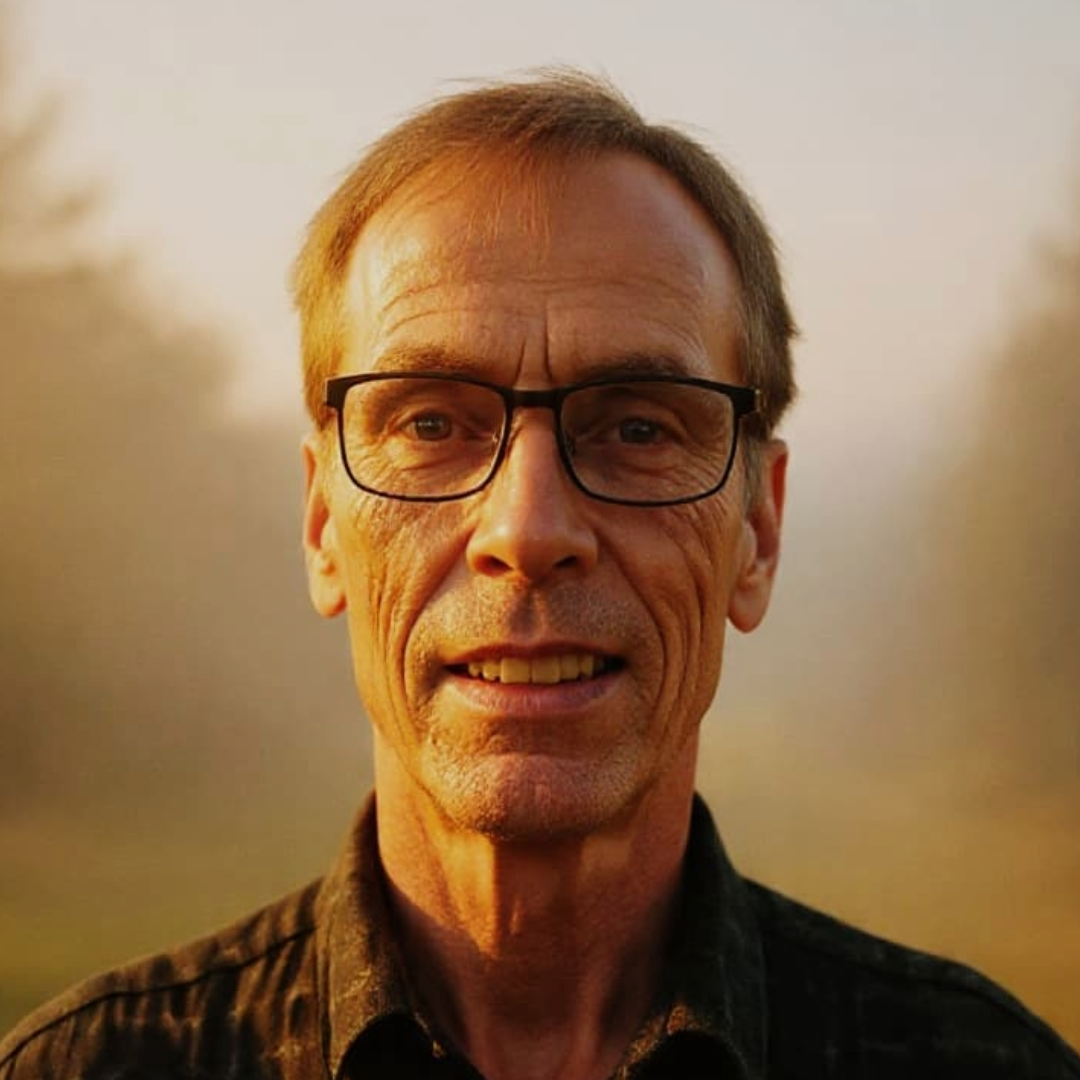
Jody McHugh is an Atlanta native and lifelong storyteller whose colorful life has brought him into contact with an unforgettable cast of characters and no shortage of remarkable experiences.
A regular storyteller at The Moth and other venues around Atlanta, Jody has built a collection of true stories filled with humor, suspense, heart, and the unexpected, hoping to one day bring them to the screen.
He lives in Atlanta with his wife of 35 years and is a frequent visitor to Europe, where his daughter lives.