Apple Podcasts
 Spotify
 War, Concentration Camp and Refugee Survivor | Danijela Čolić
Danijela Čolić is an entrepreneur, strategist and Bosnian war refugee who has turned personal loss, displacement and hardship into a life built around business, community and helping others grow.
In this episode of Life by Misadventure, Danijela talks about the strength she draws from her family, the stories behind her tattoos, building Club Quantum and the lessons she has learned from running several businesses.
This is a conversation about using pain as fuel, letting go of what no longer serves you and having the courage to build a life that reflects who you really are.
About the Show
Life by Misadventure is hosted by David Brown and features honest, engaging conversations with interesting people about life, loss, resilience, ideas, and the experiences that shape us.
Speaker A
What was your misadventure?
Speaker B
Firstly, I was in a war in former Yugoslavia which broke out in 1992.
Speaker B
Then I was in a concentration camp for a while, and then I was a refugee in Croatia and then in the uk.
Speaker B
So it all begins.
Speaker B
Waking up one morning in Bosnia in a beautiful home that my father built.
Speaker B
I was born into an amazing family.
Speaker B
My father was a very successful businessman and he actually kidnapped my mother on her wedding day to someone else.
Speaker A
That sounds like a story in itself.
Speaker B
It is, but I was born, so that wasn't the misadventure.
Speaker B
But he kidnapped her on her wedding day to somebody else who was 20 years older than she was.
Speaker B
And he was my grandfather's best friend, so he knew my mum growing up.
Speaker B
And as you do, in a traditional Balkan way, rather than saying, I'm in love with you, would you marry me?
Speaker B
Instead of that guy, he.
Speaker B
He kidnapped my mum under gunpoint and drove her across the border to the Alps.
Speaker B
So basically, I was born into quite a privileged family.
Speaker B
Privileged as in my father, who my mother married into that family, did very well for himself, was able to provide my mum with literally the dream home on some beautiful, beautiful land and so on.
Speaker B
You know, she had people working for her at home.
Speaker B
She had flowers brought in from Holland, she had, you know, gold.
Speaker B
I mean, it was just the most fairy tale story.
Speaker B
Anyway, in 1992, one day, one peaceful day, we woke up in the morning to tanks, firearms, shooting grenades.
Speaker B
You know, literally these tanks, like, driving down back roads into towns, into villages, into cities.
Speaker B
And what they were doing was either, you know, snipering, killing people on the spot, men mainly, and boy children.
Speaker B
And they were grenading houses with people still in them.
Speaker B
They were going in and pulling people out of homes, snatching boy babies out of women's arms, throwing them off balconies.
Speaker B
Basically, it was a siege by the Serbian army or the Serbian Republic who came into Bosnia.
Speaker B
And their aim was to ethnic cleanse and eliminate males from Bosnia as a country or as a nation, so that they couldn't create a rebellion army against the Serbs.
Speaker B
So as a young child at that time, three and a half going on four.
Speaker B
What I remember on that day when the siege happened was everybody was pulled out of their homes and we were all herded with a tank behind us and soldiers into a neighbor's garden.
Speaker B
So everybody in my small area where we lived, call it like a village, were herded into one garden.
Speaker B
And in that garden, basically, whilst all the women and children were watching, they took all of the men aside.
Speaker B
So Some of the men they shot on the spot, some of them they beat some of them, they put cigarettes out on some of the men, including my father and my grandfather.
Speaker B
They herded in front of a tank and basically took them away running or being hit or being shot as they're running with the women and children.
Speaker B
They left them there at the home.
Speaker B
Some they killed on the spot, some of the women were taken away to be raped in neighbors houses.
Speaker B
My mum in particular was went through quite a bad time because my father was quite high on the hit list for the country because of dealings that he worked in and worked with and the international business that he was involved in.
Speaker B
So my father worked across Middle East, North Africa, Burma, Turkey and he spent a lot of time in Germany and he had multinational companies and businesses, everything from cars, mechanics, old classic cars.
Speaker B
So we always had old classic cars in the garage that he was doing up to being one of the first suppliers of fighter jet engine planes into Burma.
Speaker B
He dealt a lot with Rolls, Roy engines and so on.
Speaker B
So he made his money internationally.
Speaker B
He was also very much involved with gold.
Speaker B
So he was quite high on the hit list.
Speaker B
Number one because he had money, number two, because he had piles of gold here, there and everywhere.
Speaker B
And number three because he had too much knowledge and was very close to the government that was running Bosnia in Tito's time, when it was still former Yugoslavia.
Speaker B
So my father was one of those people that knew all the celebrities.
Speaker B
We had really famous singers, you know, singing off our balconies.
Speaker B
I was named by a famous singer.
Speaker B
So I've got two names, Daniela and Layla.
Speaker B
So I've got a European and non European Muslim name and a non Muslim name.
Speaker B
And so he was quite high on that hit list for that reason when they took him away the first time, my mom was herded with myself and my brother and my grandmother and taken back, that she dragged back to my father's house.
Speaker B
She was.
Speaker B
Then we were left outside like screaming while the soldiers took my mum into the house and they set a sofa light with her on it.
Speaker B
They then raped her, beat her, broke her nose, broke a few bones in her body.
Speaker B
And it was all because she wouldn't give up where my father had, you know, money or buried in Bosnia, used to bury your gold or anything like that.
Speaker B
And she wouldn't give up any information about him.
Speaker B
So she stood by him to the point where they nearly killed and murdered her in that moment.
Speaker B
They told her she had they'll be back in half an hour.
Speaker B
And she had half an hour to dig out the gold from around the land and leave it there for them or they would kill her, my grandmother and myself and my brother.
Speaker B
In that moment, my mum literally crawled out of the house, like, bleeding.
Speaker B
As soon as the Serbian army left, like, literally, she was shattered.
Speaker B
Our house was grenaded and bombs.
Speaker B
So you can imagine everything falling down around us.
Speaker B
And then they said they'd be back in half an hour.
Speaker B
My mum, I don't know how she stood up, but my grandmother took myself and my mum took my brother, and they literally ran down the road because my grandmother's farm was on the same road as where my father built my mother's house because he wanted to keep the family close.
Speaker B
We went to my grandmother's farm and she, like, within seconds, tried to patch up parts of my mother.
Speaker B
And the time was ticking.
Speaker B
My grandmother knew if that they came back to the house, my mum wasn't there.
Speaker B
She'd go.
Speaker B
They'd go to my grandmother's house first.
Speaker B
So basically, the two women, my grandmother stuffed a little bit of money under her boobs.
Speaker B
They.
Speaker B
They had all they had, literally.
Speaker B
They had.
Speaker B
They took some photographs, a little bit of money, which would have been German Deutsch marks back in the day.
Speaker B
They took the us two kids, no food, no nothing to carry, and they ran through the back of my nana's farm, through a cornfield, to try and escape.
Speaker B
The Serbian army literally parading down that town and stopping at each house to kill people.
Speaker B
And then as we were running through these fields, I don't know where, I don't know how they carried us, there were snipers shooting literally at us through these fields.
Speaker B
In my grandmother's garden, thankfully, the corn was high.
Speaker B
If the corn hadn't have been there, I think it would have been a very different story.
Speaker B
So the Serbian army used to play games, and it wasn't just the army, because my father's best friends and neighbors and everybody else gathered on the Serbian side.
Speaker B
So neighbors turned against neighbors, friends turned against friends, family turned against family, Serbs and Bosnians.
Speaker B
So it was a game for all, basically, to see who they could sniper, how many they could shoot, how quickly this ethnic cleansing could.
Speaker B
Could happen.
Speaker B
Anyway, as we're running through these cornfields, these snipers are shooting left, right and center.
Speaker B
Thankfully, none of us got hit.
Speaker B
So the first safe space that we found was an old abandoned, kind of like hut, shack, old house, kind of like one of those, you know, like if you're a farmer on a field and it's too hot, you kind of climb into a shack and you can, you can work from there with a mini kitchen, kind of like a shepherd's hut, but on the ground made of stone and, and wood.
Speaker B
So we hid in there for a bit, but it was just too dangerous because there were just bullets flying around everywhere.
Speaker B
We then managed to escape from there.
Speaker B
I say escape, run from there.
Speaker B
And we found some other families hiding out in a nearby home.
Speaker B
However, that night that home was also raided by the Serbian army and we were all taken into concentration camps.
Speaker B
And those concentration camps, Pried or Marasca near us.
Speaker B
When we were taken into those, that's when I think the shock of everything that just happened for my mom, my nana and everybody else hit.
Speaker B
Because what the Serbs did was they lined up the women and children.
Speaker B
Now, remember, men were either taken, shot, killed, boy children.
Speaker B
My mum managed to dress my brother as a girl because he had, like a longer hair as a boy.
Speaker B
She tied it up and put a dress, one of my dresses on him as we were escaping, basically.
Speaker B
I can't believe she thought to do that in that moment.
Speaker B
Now, bear in mind that we don't know where any of the other family is.
Speaker B
So my, my, my uncle, my mum's brother's gone, my grandfather's gone and my father's gone.
Speaker B
That's just within our close family, within that town, as well as all the other men and boy children.
Speaker B
Anyway, so when we were lining up in this concentration camp, it was basically Russian roulette.
Speaker B
So they would kill some people.
Speaker B
What they did with women who were wearing earrings or jewelry is they literally just pull the earrings out of their ears.
Speaker B
They tore their ears like my nana was wearing some earrings.
Speaker B
So they were just tearing, like jewelry from women's ears, snatching everything that they could, basically robbing the living daylights out of people, which they also went back to my home that was destroyed and had trailers trudging the ground.
Speaker B
They even pulled the wires for the copper out of the walls, took the windows, took all the valuables.
Speaker B
And not only were people killed, murdered, families torn apart and tortured, they were robbing, left, right and center, every single home in, in the whole of the country.
Speaker B
Bank, museum.
Speaker B
You've got to remember at this point, not only that my mum, my nan and everybody became penniless because my father's bank accounts were dissolved.
Speaker B
There's no way anybody could go back on land that was now full of mines and God knows what else.
Speaker B
And the women took nothing with them.
Speaker B
So every single person was, you know, tired, hungry, waterless, moneyless, penniless, Literally.
Speaker B
There was nothing there.
Speaker B
And when we were lining up to go into this concentration camp, they pick and picked and chose people that they would kill.
Speaker B
In that moment, the rest of us that got through, we were put into a concentration camp that had no heating, no electric, no light, no food, no water.
Speaker B
So women and kids were literally on a stone floor.
Speaker B
We weren't fed.
Speaker B
And I remember every single night, like, sobbing, crying from kids, from women.
Speaker B
The soldiers would burst in.
Speaker B
They take.
Speaker B
They take a pic of a woman to rape her.
Speaker B
That.
Speaker B
And then they'd just throw them back in with the kids.
Speaker B
And some of the mums never came back because they were killed.
Speaker B
And then the Serbian army never supplied any food or water into the concentration camps.
Speaker B
They basically had.
Speaker B
Everybody was getting sick.
Speaker B
I remember people picking grass.
Speaker B
We were eating grass to stay alive.
Speaker B
I remember the Serbs, like, burning women and kids with cigarette butts.
Speaker B
Like, they'd be like, how many can you put on this one with?
Speaker B
And then there were, like, just so many terrible things.
Speaker B
I remember smells, like, smells of urine and people like, going to the toilet in the middle of this massive, like, how can I explain it?
Speaker B
Warehouse, but with no windows.
Speaker B
And I remember that my.
Speaker B
From that moment, I'll never remember the smells of, like, dead bodies, things rotting.
Speaker B
Also, it was really strange.
Speaker B
I developed this, like, sixth, seventh, eighth sense, really good eyesight.
Speaker B
I could.
Speaker B
I could literally hear.
Speaker B
Even to this day, I hear everything.
Speaker B
Everything will wake me up.
Speaker B
And smells.
Speaker B
I can smell everything.
Speaker B
Like, everyone has a smell to me.
Speaker B
Right.
Speaker B
Because I believe that we develop these senses in that situation, these protective, primal senses to basically protect ourselves as safety.
Speaker B
So I could hear everything come in.
Speaker B
I could smell everything coming.
Speaker B
And even in the darkness, you develop a sense of.
Speaker B
Of seeing because you feel energy and movement.
Speaker A
Yeah, it's.
Speaker A
It's interesting you say that and just to.
Speaker A
To.
Speaker A
I don't want to interrupt the flow of this, but.
Speaker A
But yeah, I mean, you're absolutely right.
Speaker A
And I've heard other people talk about that, and even soldiers, a lot of the Special forces, soldiers in militaries around the world, not just the US but they're allowed to grow their hair out.
Speaker A
And the reason is.
Speaker A
And this came from the.
Speaker A
The American Indians, is they used to say that you can actually tell from your hair.
Speaker A
It actually gives you an extra sense almost that you can tell when people are coming up on you.
Speaker B
Yeah.
Speaker A
Because your hair reacts to it, which is really weird.
Speaker A
And they did all these tests, and they basically were able to decide that that was accurate.
Speaker B
Yeah.
Speaker A
And that they weren't making it up.
Speaker A
So that's why all your special forces guys are allowed to have long hair.
Speaker B
And I.
Speaker B
The hair has feelers.
Speaker B
I do believe in, you know, through my healing process.
Speaker B
I've really studied into the inner work that I was doing and have been doing, always will continue doing.
Speaker B
But I've done a lot of work into studying the senses.
Speaker B
And hair definitely has its own feelers.
Speaker B
It's one of the most spiritual elements of the body.
Speaker B
It feels and senses, and it holds our history.
Speaker B
So I do, I do.
Speaker B
I have come across that.
Speaker B
And I can guarantee you that in the war, you know, every single woman grew her hair out.
Speaker B
It was such a significant thing of, how can I say, in the Muslim culture, women.
Speaker B
I was brought up Muslim.
Speaker B
Even though I'm, you know, a spiritual hippie that stays trippy.
Speaker B
I was literally born up, brought up a Muslim.
Speaker B
And my whole family are mainly Muslims, although, you know, kids married into Christianity, into, into Catholicism, into, into non religious families.
Speaker B
We were brought up as Muslim children.
Speaker B
So I do know a huge part of that culture as well.
Speaker B
So that was part of the hair.
Speaker B
But we do believe in it spiritually anyway.
Speaker B
So while we're in this concentration camp, I. I don't know how I was finding the positives within this, like, horror story of my life.
Speaker B
And I think it was things like, oh, my goodness, my sense of smell.
Speaker B
Oh my God.
Speaker B
So I'd practice these, like, you know, things and, and be like, I know what's coming.
Speaker B
And I turned it all into a game.
Speaker B
I think it was because my mama, my.
Speaker B
My mama, mama is mother in Bosnia.
Speaker B
My mama, my nana went into shock.
Speaker B
So these women now have potentially lost their husbands, have lost kids, have lost their own parents, have lost their home, their dignity.
Speaker B
My mom being raped obviously lost all of her dignity.
Speaker B
And they lost everything that they had, their culture, their freedom, and they were losing their country and their soul.
Speaker B
So they were in shock.
Speaker B
And I think us kids, I don't know how, you know, within a day you grow up so quickly, you learn to do so much within a day, and you start protecting your own as a child who should be protected, you start being the protector.
Speaker B
Because there's a level that the trauma that an adult of my mother's age, at that age, in her late 20s, goes through, that just literally numbs them.
Speaker B
I've got the word numb tattooed.
Speaker B
I've got so many tattoos here for a very specific reason, because I know that feeling very well mainly from watching my mother, which I then developed a sense for rather than allowing myself to go into a numb state anyhow.
Speaker B
So we developed these senses.
Speaker B
We stayed in this concentration camp for a long time.
Speaker B
And sadly, both my brother and I developed tuberculosis within that concentration camp setting one day.
Speaker B
I don't know.
Speaker B
You know, people say miracles don't exist.
Speaker B
They do exist.
Speaker B
One day, the doors opened.
Speaker B
To this day, we still don't know why, how, who ordered that to happen.
Speaker B
But these doors opened.
Speaker B
Everyone was skinny and starving.
Speaker B
The only time we ever got food in those concentration camps again, this was a game, was when the soldiers opened the doors.
Speaker B
This is when people went out to eat the grass.
Speaker B
They filled like troughs, as if we were animals with water.
Speaker B
But also surrounding people who had lost their homes, who were still alive while would throw, like, bread or food or even like corn into the concentration camps over the walls.
Speaker B
Now, do bear in mind that you couldn't buy flour.
Speaker B
All the shops were robbed.
Speaker B
You couldn't.
Speaker B
And, you know, it cost so much money, you'd have to have a wheelbarrow to buy a loaf of bread in that day because everything just deflated or inflated.
Speaker B
So how that food was thrown over.
Speaker B
I mean, every single person that decided to go near a concentration camp was already risking their lives.
Speaker B
No cctv.
Speaker B
So there were just things.
Speaker B
I don't know when they threw it, how they threw it, but when we were let out, we were picking it off the floor like animals.
Speaker B
And I think that was part of the fun that the Serbs were having, because during the war, it all seemed like a big game.
Speaker B
It still seems like a big game because during the war, you know, soldiers that came in from different countries that I won't mention at this moment, but those countries know who they are.
Speaker B
They paid to shoot like a safari to shoot the women and children in Bosnia during the war.
Speaker B
They literally paid as if they were going on a hunting safari.
Speaker B
So everything was always a game.
Speaker B
And they would tell people that they were safe.
Speaker B
We've just.
Speaker B
I say celebrate.
Speaker B
We've just honored the 11th of July, which was Srebrenica, when the UN freed Srebrenica and said it was a safe place to be in 1995, and 8,732 people were killed on.
Speaker B
On that day in Srebrenica.
Speaker B
They did another ethnic, ethnic cleanse after stating that the place was safe.
Speaker B
So it was another game.
Speaker B
And then they tried to cover it up.
Speaker B
And then the mass burial graves happened.
Speaker B
So we've just gone through that.
Speaker B
We're all not forgetting.
Speaker B
They say forget, but there's a level of alchemizing and there's a level of.
Speaker B
Actually, you shouldn't really forget what happened to your family, because it makes you everything that you are anyway.
Speaker B
So from this concentration camp, these doors open.
Speaker B
I'm dipping in and out because I don't really live in a linear state of mind any day of my life.
Speaker B
I live in the past, present, future, at all times, so.
Speaker B
Or multiverse is David, as they call it.
Speaker B
So these doors opened and then we were all herded out by shouting soldiers and gunshots.
Speaker B
And as we walked out of this concentration camp, there were buses, like, almost like old.
Speaker B
Old coaches waiting.
Speaker B
There must have been four or five of them.
Speaker B
And they were like, women and kids on the coaches, on the coaches.
Speaker B
And we were like, are we, like.
Speaker B
My mum was like, are they going to kill us?
Speaker B
Bosnian parents have no filter, by the way we say it as it is.
Speaker B
And.
Speaker B
And, you know, we get told as it is.
Speaker B
So, of course, in front of the kids, it's like, are we going to get killed?
Speaker B
Are we going to survive again?
Speaker B
I think the kids were all numb to this at this stage, starving, hungry anyway, so they heard women and children onto these buses.
Speaker B
And then we get taken.
Speaker B
Whether it's to your death or whether it's to life, nobody knew because some of those buses didn't finish up with us, and some of them did.
Speaker B
And then they'd heard people into lorries, and some of those lorries were dropped into, like, big rivers and things like that.
Speaker B
And the people never survived or they were gassed or they were shot through the sides.
Speaker B
And I remember it, us going on this lorry.
Speaker B
Sorry, on this bus over some.
Speaker B
Bosnia's very mountainous, very beautiful.
Speaker B
But I remember these mountains and there was nothing for a while except water.
Speaker B
And then all of a sudden I saw lights and that.
Speaker B
And I've had these revisits throughout my life of these, like, lights.
Speaker B
And I feel like every time I've had these lights, I've been able to alchemize a bit more and I've been able to heal a bit more, or something amazing's happened that should have never happened.
Speaker B
That has been wonderful in my life.
Speaker B
It's almost like the universe allows me to see the light amongst the darkness when I need it to be there.
Speaker B
So we see these lights and it's like.
Speaker B
So you can hear everyone going, oh, there's this town, there's a city.
Speaker B
We might be able to get out.
Speaker B
They might let us free.
Speaker B
Da, da, da, da.
Speaker B
And so they take us over this basically mountain and down it into this city of lights.
Speaker B
And we come out into the city of lights.
Speaker B
Everything is lit.
Speaker B
Now imagine there's no electricity anyway, except this, this place, very strange.
Speaker B
Anyway, we got out there and we were actually taken into safe houses by some other Muslim families.
Speaker B
And from there we were taken to Croatia.
Speaker B
So at that point, I think my child memory kind of where your body, when you're in trauma response or in stages of trauma, forces you to forget particular parts or moments that happened.
Speaker B
It's almost like I went to sleep in that place and somehow ended up in Croatia in a safe house and woke up there, like with no shooting, no noises, reunited with one of my aunties and my cousins.
Speaker B
My nana was there, my mum was there, my brother was there and I was there.
Speaker B
And I remember this whole, like block of my memory and then waking up really sick.
Speaker B
And that's when the tuberculosis hit.
Speaker B
I was then taken to a Croatian hospital that was very far away from my mother.
Speaker B
And instead of them healing us as what you would expect, they told the parents they would be healing us, took the kids away from the parents and we became guinea pigs for experimentation.
Speaker B
So a lot of this was never told to the parents.
Speaker B
And I went through a level of hypnotism to actually try and remember a lot of what happened at that time.
Speaker B
So they did numerous different experiments and tests on children that didn't need what it was that they were saying that they needed to treat tb, including like piercing ears and drawing blood.
Speaker B
Every single part of your body had some form of like blood drawn from it.
Speaker B
I had like fluid taken from my spine.
Speaker B
No painkiller or anything like that.
Speaker B
That was traumatic.
Speaker B
The pain that I went through, I remember going through.
Speaker B
My brother was in the hospital with me for a while.
Speaker B
Then he got given back to my mom.
Speaker B
My poor mom was traveling hours every single day on a bus to try and come and see us and go back home, bring us food.
Speaker B
They wouldn't feed us there.
Speaker B
So basically it was like a nightmare.
Speaker B
It was like living in a nightmare,.
Speaker A
Gone from bad to worse almost.
Speaker B
Yeah.
Speaker B
But then I remember, you know, I said I had this like blockage of what happened whilst in that hospital.
Speaker B
I think I'd passed out at some stage and I ended up falling from a bunk bed to the floor and ended up lying on a freezing cold floor.
Speaker B
I wasn't in a good state that morning.
Speaker B
I think I nearly died like two or three times in the hospital.
Speaker B
And I remember this memory of the last time I saw my father.
Speaker B
So I had this massive blank, then went into hospital.
Speaker B
Then this memory comes and the day that my mum visited, I said, I Saw dad.
Speaker B
She said, yeah, you did.
Speaker B
One more time.
Speaker B
I was like, where was that?
Speaker B
So in that whole bit where I thought we went from the concentration camp, the City of Lights, to Croatia, my father did visit.
Speaker B
I didn't have a dream, I didn't have a vision.
Speaker B
It actually was true.
Speaker B
He visited us for the last time.
Speaker B
He'd managed to get away somehow from the.
Speaker B
From that first siege with my grandfather and they escaped over some mountains and sadly, when I.
Speaker B
The last time I saw my father, his whole shoulder was blown off, so he was heavily wounded and literally bleeding to death.
Speaker B
But my.
Speaker B
He came to tell the news that my grandfather was killed because my grandfather jumped on top of a stranger's child to protect them and a grenade went through his heart.
Speaker B
And then my brother, my.
Speaker B
My dad was the same grenade, a piece of shrapnel shot and took his shoulder off while he was hiding another child.
Speaker B
And that was the last time that we saw him.
Speaker B
And then he was taken to a town further away and he was shot into a mass grave that we then discovered his body, sorry, his bones, you know, and all the.
Speaker B
All the testing was done 10, 10, 11 years afterwards, 12.
Speaker B
So we only managed to have a funeral for him.
Speaker B
And my grandfather came just before.
Speaker B
Eight years before that, thankfully, my mum's brother, my uncle, who's been like a father to me, an amazing man, survived in a concentration camp, was one of the first refugees to the UK amongst the first men brought here and the women and children.
Speaker B
So he managed to get us across to the UK because he was searching for us all that time anyway.
Speaker B
So I did have the memory of my father.
Speaker B
I did see him one last time this day that I woke up on the hospital on that floor, nearly dead.
Speaker B
I feel like I was put into that state, subconscious state, to be able to have that memory.
Speaker B
And then it was real.
Speaker B
And then basically one day my mum said, enough.
Speaker B
And they said it was illegal to take the children out of the hospitals at that time.
Speaker B
So my mum kidnapped me, literally.
Speaker B
She says she was going out to the grounds of the hospital to take a walk and she had a car with a neighbor from the safe house who was actually an ex police officer in the Croatian army, waiting literally to take me out because I'd given my brother back to her.
Speaker B
And she did.
Speaker B
She kidnapped me out of the hospital and she took me back home, unhealed, completely unhealed and dying of tb.
Speaker B
So they said I wouldn't make it.
Speaker B
I was in hospital for seven months.
Speaker A
Seven months, wow, okay.
Speaker B
In the war, in a War.
Speaker A
So that's a good question.
Speaker A
Just quickly.
Speaker A
So in the concentration camp, how long were you in there?
Speaker B
I think it was around a month.
Speaker B
I think three weeks to a month.
Speaker B
I still haven't gone into the depths of that with my mum or my grandmother, sadly, passed a couple of years back.
Speaker B
But I haven't gone into the depths of that with my.
Speaker B
With my mother because it's taken her 31 years to even discuss the simplest parts of what happened.
Speaker B
So we go easy on that.
Speaker B
And I don't recall remember anyone else who was in that concentration camp with us except my younger brother.
Speaker B
So, yeah, that's one question I haven't interrogated her on yet for many reasons.
Speaker A
No.
Speaker A
That's understandable.
Speaker A
So now you're like a year since that very first incident.
Speaker A
By the time you've been through the concentration camp, you've been taken into Croatia.
Speaker A
You've then been in the hospital for ages.
Speaker A
Your mom's now kidnapped you back, taken you, and now you're in another safe.
Speaker B
House in Croatia for the moment.
Speaker A
In Croatia for the moment.
Speaker A
Yeah, for the moment.
Speaker B
With two or three other refugee families around us.
Speaker B
So some of the creations that were not on the Serbian side did provide their homes for refugees.
Speaker B
They gave their homes up, the whole home for refugees, and moved in with their own families for that short period of time.
Speaker B
But then I still needed to be healed.
Speaker B
So thankfully, my mother was healing well at that time from her wounds.
Speaker B
My brother's TB seemed to have gone.
Speaker B
And funnily enough, and I think this is where all of my love for herbs, plants, alternative medicines, which I believe are the original medicines, I don't know why we call them alternative came to be because it was the old women, as you do, the women's healing circle, that said, no more medicine, no more testing.
Speaker B
We're gonna heal her with this.
Speaker B
It was herbs, animal fat that they disguised with cacao, somehow that they managed to get.
Speaker B
Remember rash.
Speaker B
We were rationing everything.
Speaker B
We had nothing.
Speaker B
So somehow we had, like, cacao, we had animal fat, and we had herbs, things like dandelion, which I still use to this day, every single day.
Speaker B
Nettles, primroses, daisies, everything that they could find to heal us.
Speaker B
Certain trees that my grandmother would crush, make into tea, make into formulas, and they would feed it to us because my grandmother believed that all medicine was herbal.
Speaker B
And in where I come from, every town had a herbal woman or a few herbal women, probably called a witch once upon time.
Speaker B
But still, you know, which we all practice.
Speaker A
It's a safe Space, Yeah.
Speaker B
So that's where it all started for me.
Speaker B
And you know what?
Speaker B
It healed me.
Speaker B
It literally made my TB disappear.
Speaker B
Because by the time we came to the uk, when we were called upon by the British Red Cross to pull us out as refugees, basically you were on a list, so family called out for you, they were able to get your papers sooner, quicker and easier.
Speaker B
Half of my family, my auntie, my cousins and her husband ended up going to America.
Speaker B
We ended up in the uk.
Speaker B
My uncle ended up in the uk.
Speaker B
That's who got us here.
Speaker B
That was at the time of John Major.
Speaker B
And some of our family ended up in Switzerland, Sweden, Australia, Germany.
Speaker B
They always say there's.
Speaker B
There's always a Bosnian, you know, in Germany and the UK took quite a lot of Bosnian refugees at that time.
Speaker B
Um, so we somehow got a call one day to say, number one, my uncle was alive.
Speaker B
So you can imagine my grandmother, that was her son and my.
Speaker B
My mum, and he was going to get us out.
Speaker B
So we were on that list and we were waiting and waiting and I.
Speaker B
But.
Speaker B
But that time in Croatia for me was amazing as a child.
Speaker B
And I remember the hot summers, chasing lizards, making toys out of things like, you know, the silk that comes from corn on the cob, making hair for dolls and things that we could find.
Speaker B
Obviously, everyone had to be cautious of.
Speaker B
Of shrapnel and, you know, undetonated things in the ground.
Speaker B
Mines, tanks turning up, landmines.
Speaker B
There was a shitload of landmines tanks turning up at any point.
Speaker B
We were never safe.
Speaker B
We were in a safe house at that time.
Speaker B
But do remember that in 95, a safe place meant another 8,000 something people dying.
Speaker B
So that was an amazing moment.
Speaker B
And I remember all the refugee families in different homes got very close and we're still friends to this day because that whole neighborhood came to England was amazing in the end, bit by bit, when we came to England, we landed.
Speaker B
I think it was a BA flight.
Speaker B
We landed at the airport and my goodness, have I like.
Speaker B
It was like photographers, cameramen, newspapers.
Speaker B
It was just like, whoa, flash, flash, flash, flash, flash, flash.
Speaker B
Now, refugees in clothes that they.
Speaker B
They, you know, were God knows how old and that they'd been handed over from someone's stash of old clothes or whatever.
Speaker B
So with no money, landing in a country nobody spoke English, by the way, this was.
Speaker B
Learnt this accent, and landing here with all that, like, paparazzi to say at the airport, going through not knowing anything and then walking through the doors and seeing my uncle's face and then seeing my mom, my nan.
Speaker B
Like, they literally broke.
Speaker B
Everyone broke down.
Speaker B
It was just like, oh, my God, we can breathe, we're safe.
Speaker B
The trust that they had in the UK and the system here at that time was phenomenal.
Speaker B
So I haven't spent a lot of time, I would say, as an adult in the uk.
Speaker B
I've been out of it for quite a long time, in and out.
Speaker B
I reside here, but my home is international, so I never sit still.
Speaker B
But my goodness, did it do a lot for me and my family back in that time.
Speaker B
So we were basically brought in as refugees.
Speaker B
Complete refugee status, like prim and proper refugees.
Speaker B
There was no, you know, actual refugees, actual refugees, not called immigrants.
Speaker B
We were actually labeled the refugee kids and women and da, da, da.
Speaker B
Then from the airport, we were taken to Cambridge.
Speaker B
So our refugee center was in Cambridge.
Speaker B
Refugees were taken all over the uk, but we went to Cambridge.
Speaker B
It was an old people's home previously, and we were given one room between four or five of us, three set meals a day.
Speaker B
You know, it was actually.
Speaker B
It was actually lovely to live with so many other people that had been through the same experience.
Speaker B
I remember an English chef called Sean would always sneak out custard creams and bourbon biscuits for the kids and, like, just stash them in the rooms.
Speaker B
We were given clothes donations.
Speaker B
So every week a truck that was donated by charity would come into the.
Speaker B
Into the center and empty into the massive conservatory there.
Speaker B
And then.
Speaker B
It's funny because when you have nothing, I have an amazing memory of what do you pick out of a pile of everything?
Speaker B
You know, it could have been a bit of furniture, it could have been a cassette player, it could have been clothes, jewelry, like old brick and brac, you know, things that people throw away in a charity shop, basically.
Speaker B
And then one of the first things I ever picked out was music tapes and didn't speak the language.
Speaker B
So one of the things I picked out, music has always been a huge part of my life, of my mother's life, of our family life and of refugees lives, because when they had nothing, somehow someone always had music.
Speaker B
And I believe that is what got them through massively.
Speaker B
And if you listen to Bosnian music and the depth of those words and what the singers are singing and, you know, the.
Speaker B
The healing within that music, I do believe it was a huge part of what got the refugees through, especially when we arrived in the UK and nobody knew in English, so they would listen to their own music and then try and tie themselves up into the culture.
Speaker B
The first cassette that I pulled out of that heap of Donations was Bonnie Tyler Hero Relevant still one of my favorite songs.
Speaker B
I'm sad to hear.
Speaker B
Did she die last Friday?
Speaker B
Yeah, my daughter told me.
Speaker B
My daughter's got this great love of music.
Speaker B
That's that sad.
Speaker B
But that was my first ever cassette in English.
Speaker B
And the other one that I picked out was Purple Rain by Prince.
Speaker B
Classic, right?
Speaker A
Could be worse.
Speaker B
I know, right.
Speaker B
So then I have fond memories of that center.
Speaker B
That's when we had outdoor play, we had bicycles, we had amazing caseworkers that were.
Speaker B
Some were half Bosnian, half English.
Speaker B
Some had moved here pre the war, some were married into the.
Speaker B
So there were people who knew our story and understood our story and there were a load of volunteers as well.
Speaker B
The adults were given the opportunity to learn English in the center.
Speaker B
So they were given some college classes.
Speaker B
You know, college teachers would come out and teach.
Speaker B
We were given three meals a day whilst we were then prepared to integrate into the English system.
Speaker B
So I believe that that was done really, really well.
Speaker B
Each caseworker was responsible for a family or families, and they put us into school.
Speaker B
So I went to a lovely little primary school in Cambridge.
Speaker B
No word of English, very overprotective of my brother.
Speaker B
After what had happened, I think it was very hard for my mum and my grandmother to see us go to school because the whole.
Speaker B
I even.
Speaker B
I slept in my grandmother's bed.
Speaker B
This is no joke in this country.
Speaker B
Until I was about 11 and she moved out into a home with my uncle.
Speaker B
Literally, like did not part from that family unit.
Speaker B
My brother was a bit.
Speaker B
It's a bit easier for him in terms of being able to sleep on his own, but he was a bit younger, so I think his memory is a bit more vivid, whereas I remember like staying alert and awake.
Speaker B
Anyway, when we went to school, I was very overprotective.
Speaker B
It was very hard to give my brother space and vice versa.
Speaker B
Anyway, we didn't stay there for long because we were given a council house by the government in Essex, in Harlow, to be specific.
Speaker B
And my goodness, that was like.
Speaker B
That was.
Speaker B
That was all right until I hit my teens.
Speaker B
And then Harlow really became a place where you had to be very street wise to get through being a teenager in Harlow.
Speaker B
Now bear in mind that from the age of seven I was acting as if I was 30.
Speaker B
So I was.
Speaker B
My mum went out to work when I was seven years old, barely knowing any English.
Speaker B
But she went out to earn some money, basically working in a fish and chip shop.
Speaker B
And I looked after the house, I cooked, I cleaned, went to school and brought up my Brother My grandmother popped in here and there and my auntie popped in here and there and my auntie was only uncovered to be alive years after we came to the uk, so she was brought over and moved in near us.
Speaker B
So she continued to stay in the war way past another two or three years after us.
Speaker B
It went on and on and on, that war.
Speaker B
We were lucky to come out as early as we did because there were families that never got out, that stayed until this day.
Speaker B
They're still in Bosnia.
Speaker B
They're the real war children that learnt to survive in a very different way.
Speaker B
They can fish with their hands, they can climb trees barefoot, they can literally do everything and they'll always make money.
Speaker B
So as a kid here, I really had to grow up very quickly and look after the family.
Speaker B
I then went to work when I was 11 years old and I started working in the same fish and chip shop as my mum to earn some money during the weekend.
Speaker B
Now, consider Mum's English wasn't ever that good at that time.
Speaker B
So I did all the parents evenings for my brother and so on.
Speaker B
I literally did all the school runs, getting him home from school, you know, having his friends over to our house, watching him while he plays out and so on.
Speaker B
And then from 11 I started to work.
Speaker B
So I feel like I've had from 11 to 20, I feel like I've worked an extra 10 years.
Speaker B
So where I'm hitting 40 now, I feel like I've already worked till I'm 50, I'm ready to retire.
Speaker B
So I went to work by about 14, 15, I was working three jobs, got through college, did quite well.
Speaker B
I then at 16, worked in a men's clothes shop in Asda, as well as the restaurants and a bar, earning money.
Speaker B
And then I think my first time abroad, we didn't have any money here like in the uk.
Speaker B
My first time abroad was in Germany to see one of my stepbrothers from my dad's first marriage.
Speaker B
He took us over there and my goodness, the amount of work it took to get a visa just to leave the country as a refugee was phenomenal.
Speaker B
I remember one of the big struggles was knowing that you had to stay in the UK for 10 years back in the day.
Speaker B
Now it's very different.
Speaker B
You can get passport very quickly, 10 years on good behavior to be able to get an indefinite right to remain visa and then after that you could file for a passport.
Speaker B
So imagine having no, no true identity within any documentation to say that you can go anywhere.
Speaker B
So they go back and forth, right?
Speaker A
So they had no way to prove your identity from the Bosnian side, so you couldn't even have a passport or anything, any ID from there.
Speaker B
That took time, but they, they did manage to get that stuff through.
Speaker B
But even with identity proof, we still had to prove good behavior for 10 years because that's what it used to be like.
Speaker B
Now everybody can just snap up a passport very quickly.
Speaker B
Good or bad, everyone has their own opinion.
Speaker B
But we did have to show, I believe that that rule made a lot of Bosnian men and women very hardworking.
Speaker B
They knuckle down, they have built businesses, empires, they've raised amazing kids.
Speaker B
You know what the Serbs tried to do with killing us off as a nation, I believe they've just dispersed seeds all over the world.
Speaker B
So now there's loads of us everywhere with a lot to take back to Bosnia.
Speaker B
Every year we go back.
Speaker B
And after working so hard as a kid, you know, I went abroad to Germany and I was like, oh, I love travel.
Speaker B
And that's when it all started for me.
Speaker B
Went on a clubbing 18 to 30s holiday with some girlfriends to Greece and cos in Greece.
Speaker B
And after that I was like, I need to travel.
Speaker B
I think this is where my.
Speaker B
I need to travel to learn.
Speaker B
I need to understand culture, food, taste, smells, colors, art.
Speaker B
And then I worked really hard.
Speaker B
I went to uni, qualified from university, went into into education, educational management and technology and psychology typically.
Speaker B
And worked my bum off basically to earn a living to be able to live in London.
Speaker B
I commuted a lot from Essex to London, exhausting.
Speaker B
Lived in London, met my daughter's father and had my daughter at 23 and then decided when she was about two, two and a half years old to move to China.
Speaker B
And that's when the rest of my life started.
Speaker A
Why not?
Speaker B
And we built a life in China for two years and my daughter, with chopsticks before a knife and fork and spoke Chinese and English, bit of Chinese, mainly English.
Speaker B
Whilst myself and her father worked in China in education and built up our own business out there, which we then returned to the UK to run.
Speaker B
So we built up a summer school business and an online presence, an online entity because the Miller's father codes, he does very well coding.
Speaker B
So we built a whole online language school with a learner management system, all the apps that go with it and so on and so on.
Speaker B
And that business did okay.
Speaker B
So we ended up traveling quite a lot with that.
Speaker B
Actually prior to that I was pregnant.
Speaker B
We were in Qatar.
Speaker B
We'd actually moved out to Qatar.
Speaker B
We lived in Qatar, working with the British Council in Education as well.
Speaker B
And from there I ended up working with a corporate in Kensington in London.
Speaker B
And I became some.
Speaker B
Whenever I went into a job, I had this drive and this passion and this energy that got me promoted very quickly.
Speaker B
And of course that comes from being hungry.
Speaker B
When you're hungry for food, you don't really wait around, do you?
Speaker B
Oh, you can get promoted if you do this.
Speaker B
It's like, no, no, no, dog eat dog.
Speaker B
I'm gonna get promoted now.
Speaker B
So I did and did very well in London and I was the global digital director for a very well known corporate company and that took me all around the world.
Speaker B
I then ended up doing a management buyout of a product that I loved within that company.
Speaker B
And I thought, I don't want to work for anyone else anymore, I'm just going to do a management buyout.
Speaker B
So I did.
Speaker B
And I took a children's language learning product.
Speaker B
I always have.
Speaker B
I've got passion for language and learning language and the psychology and how much that helps kids.
Speaker B
Because I was one of those kids.
Speaker B
And I took a product from 10 to 64 countries in four years.
Speaker B
I worked so hard, it literally nearly killed me.
Speaker B
My daughter traveled everywhere.
Speaker B
Her father traveled everywhere with us as well.
Speaker B
He worked as well.
Speaker B
At the same time we built up a business and a business and I worked with some amazing people.
Speaker B
I'm still friends with some of those amazing people.
Speaker B
Dear friend of mine called Emma has seen me through the last 10, 11 years of my life and that product did very well and I was very, very lucky to be able to travel as much as I did.
Speaker B
I lived that lifestyle.
Speaker B
I live the business flights, the, you know, that kind of living in, in hotels, gorgeous hotels.
Speaker B
I did a lot of the Middle East, North Africa, Dubai, Saudi, Lebanon, in and out of Lebanon.
Speaker B
I love Lebanon.
Speaker B
It reminds me of Bosnia, but they're always in a war zone too.
Speaker B
Turkey, I love Turkey.
Speaker B
China, Thailand, like everywhere.
Speaker B
Mexico, Latin America, Europe.
Speaker B
I did so much traveling and so did my daughter, so did her father.
Speaker B
And I established back in the UK in 2016 just because I thought, oh, Mills has to go to school.
Speaker B
My daughter's name's Emila, we call her Mills, she has to go to school.
Speaker B
So we kind of settled and firstly we settled in London and I was working for this corporate.
Speaker B
And then I had this dream once and it was like, I don't want to bring up a Miller on the streets.
Speaker B
London for the, for primary school, we're going to move.
Speaker B
And her father went, what?
Speaker B
So we're going to move.
Speaker B
And we paid a Deposit for her to go to this private school in London.
Speaker B
She didn't end up going to private school in Tunbridge Wells because her schools were so good.
Speaker B
She we left everything and moved out to Tunbridge Wells.
Speaker B
Why Tunbridge Wells?
Speaker B
Well, I didn't know Tunbridge Wells before but like everything else in my life I kind of adventure out and I wanted somewhere that looked like, you know, Kensington area, which we were around Earl's Court, Kensington, but wasn't that and it was a bit quieter.
Speaker B
So we ended up in Tunbridge Wells randomly and in Tunbridge Wells I continued to travel as well and built up numerous businesses.
Speaker B
When Covid came, I decided to digitalise a lot of my print, my educational print business so that I could package it into licensing contracts, white labeling contracts and basically I could license digital content because I spent years building up a digital content library.
Speaker B
We used to say content was king back in the day in the corporate world.
Speaker B
And I when publishers were going out of money and you know, letting products go very cheap, I was taking them and just stashing them.
Speaker B
And then one day we decided to start digitalizing some of our products or repackaging let's say not necessarily digitalizing but repackaging.
Speaker B
And that was my bread and butter for quite a long time until I decided that I was like oh, I'm so when Covid hit I was, I am not vaccinated.
Speaker B
So hoo ha, blah blah, whatever anybody wants to say, I'm not.
Speaker A
No judging here.
Speaker B
Exactly.
Speaker B
So I didn't get the injection and I didn't let my daughter get anything.
Speaker B
And I did become one of those people that started to think what on earth is this all about?
Speaker B
The first time ever, even when I went to Lebanon and I, oh, I forgot to tell you, I was blown up twice.
Speaker B
Once in a queue waiting to go and see a sunset with, with the, with what's going on.
Speaker B
And once sitting in a marina outside of a bank having my coffee.
Speaker B
There was an explosion in the bank so I went up in that too.
Speaker B
Not even then did I feel as claustrophobic and as like an animal, like caged animal as I did in Covid.
Speaker B
And I thought what the are they doing to us all here?
Speaker B
So I was just, I completely went the other way.
Speaker B
And that's when I decided and I'd been doing a lot of research into CBD and I divested a part of my digital company to a very well known other corporate and I used that money to establish a CBD brand.
Speaker B
I purchased seeds, I grow CBD on a piece of land in Poland.
Speaker B
And I grow it from seed, so I know exactly where it comes from.
Speaker B
And every single tincture can be traced to the lot where it grew.
Speaker B
And in Covid, my mum wasn't working as much and where she had the time to stop.
Speaker B
Now, this is the reason I have a CBD company is my mother all her pain and started coming back.
Speaker B
She developed numerous conditions and it all relates back to the trauma that she went through back in the day.
Speaker B
So she's been in quite a lot of pain, I would say pre Covid and since COVID especially with trauma related issues and illnesses from arthritis to angina.
Speaker B
With her chest and her breathing, her heart to skin discoloration joint, just her joints.
Speaker B
Anyway, so I used to a lot of research of what would help.
Speaker B
And CBD was one of those big things that kept coming up and I just thought this, I'm just gonna have a CBD company.
Speaker B
I don't know how I'm gonna do this.
Speaker B
I don't know.
Speaker B
Good God.
Speaker B
I was not aware of how much protocol there was to have one of those.
Speaker B
Yeah, the licensing.
Speaker B
The licensing belongs to the eu.
Speaker B
So actually you have to gain an EU food license.
Speaker B
Basically it's a food supplement, like a food license.
Speaker B
So I went through that process, very costly.
Speaker B
But I decided to, rather than that money sit there, I wanted to invest it into something that would help people going forwards.
Speaker B
And that's how I grew, how I grew Trippy Panther, which is my CBD brand, completely organic.
Speaker B
And I have clothes made from hemp and I have things like grinders and pain gel with the CBD in it.
Speaker B
And it made me fall in love with herbalism and the idea behind plants.
Speaker B
Not only did it make me fall in love, I've always loved them.
Speaker B
Because in my family we heal with herbs first and we all know what our garden can do for us.
Speaker B
So everyone's a gardener, my nannies to have a farm.
Speaker B
Nowadays, I make a lot of my own cheese, like cottage cheese I can make myself or tinctures.
Speaker B
I've built up an apothecary in the house, working with dry herbs, teas and adding CBD to things.
Speaker B
So I've been experimenting for years now and it moved me really into levels of healing that I believe come from within.
Speaker B
You know, finding the strength within through what we put into ourselves.
Speaker B
So whether that be food, what we drink, who we hang around with, the energy that we consume, who we're in a relationship with, who we sleep with, who we, you know, even down to who we follow on social Media who we listen to.
Speaker B
I don't have a television.
Speaker B
I was telling you earlier, I have no tv.
Speaker B
So I have no concept consumption of mainstream media.
Speaker B
Not in my social feed, not in.
Speaker B
In my house.
Speaker B
And I moved out to the middle of nowhere because I wanted to grow fruit and vegetables and have a herb garden.
Speaker B
So that's what I do now.
Speaker B
Amongst other projects, some of which I can't talk about but they include.
Speaker B
I do a lot of consultancy for brands that want to go cross global.
Speaker B
I work with amazing.
Speaker B
Some entrepreneurs, some multi billionaires who just want to see life differently.
Speaker B
I don't have a name or title for what I do.
Speaker B
I had what started off as a private members club in Tunbridge Wells called Quantum, then turned into a bar and events place and ended up taking too much of my time, energy and life from family and the things that I really love doing that I couldn't continue it anymore.
Speaker B
And in the current market, I dare not say this, but I'm going to who wants to be in hospitality?
Speaker B
It is such a difficult game to play right now and I am absolutely grateful for everybody who is continuing with hospitality, who provides service for us all to go and enjoy.
Speaker B
And really I just wanted a bar.
Speaker B
I didn't want to work or manage that bar, which I ended up doing.
Speaker B
So I just want a place I could make look pretty and fill it with antiques and shiny things and.
Speaker B
Which you did now and I still do with other places was amazing.
Speaker A
And a lot of the people that listen to this will know Quantum well.
Speaker B
Yeah.
Speaker A
And it was very bougie and beautiful inside and it was a very good, warming, welcoming place.
Speaker A
So you did a really good job with that.
Speaker B
Thank you.
Speaker B
And it was an escape for many people who wanted to take a step out of reality.
Speaker A
Yeah.
Speaker B
And I believe that.
Speaker B
I love Tunbridge World.
Speaker B
Don't get me wrong.
Speaker B
But I'm not used to being in a fishbowl.
Speaker B
I like being out at sea.
Speaker B
So for me it was too much of the same thing again and again.
Speaker B
Bar.
Speaker B
The people that I love, the people that I loved.
Speaker B
I met.
Speaker B
The relationships I've built.
Speaker B
Like you guys are the treasures that I will keep and the memories from that place.
Speaker B
You know, the candlelight, the music.
Speaker B
But it proved something to me.
Speaker B
It proved that I can design beautiful spaces just with using energy and feeling and color and smells and textures and being eclectic's okay.
Speaker B
It taught me that I can provide a safe space for people to exist, whether that be women wanting to sit on their own at a bar or people coming in groups who just wanted to come away from.
Speaker B
From the outside world.
Speaker B
And also I saw.
Speaker B
I feel like I coached a lot of amazing people through that place into something else.
Speaker B
We saw people go off to university from there, go off to travel the world, go on to get other jobs.
Speaker B
You know, like I've seen.
Speaker B
I've seen One of our managers has gone on to open his own place on the Pentilles.
Speaker B
I worked really well with local establishments, and I feel I gave heart and soul, along with my business partner and the amazing people that helped me run the club out of love.
Speaker B
A lot of people did what they did from love, not because they had to be there.
Speaker B
And I feel like that's what had us all coming back.
Speaker B
And then I was like, wow, there's so many things out there that I still need to explore.
Speaker B
And that's the thing with me.
Speaker B
Being a refugee kid taught me resilience.
Speaker B
It taught me to move on.
Speaker B
It taught me to adventure.
Speaker B
It taught me not to hold on to things that drain my energy.
Speaker B
It taught me to have the balls, even though I'm a girl, to go and just grab life by every single moment and look at things different, deeper than what somebody might do.
Speaker B
I don't know, a leaf, a flower, the smell or texture.
Speaker B
You know, I am that girl, that lady that.
Speaker B
If I see a door that that is says, don't enter, I want to go through it.
Speaker A
You're going in?
Speaker B
Yeah.
Speaker B
I was in a graveyard the other day, just because I wanted to be in a Victorian graveyard to watch the sunset.
Speaker B
There was this door.
Speaker A
And.
Speaker B
Oh, my God.
Speaker B
I mean, it was creepy when I went through, but I went through that door.
Speaker B
And I will always go through that door.
Speaker B
It taught me to be.
Speaker B
It taught me to say no.
Speaker B
It taught me to fight back.
Speaker B
Which sometimes makes me what people call.
Speaker B
I've been told that I can be quite scary.
Speaker B
It's not that I'm quite scary.
Speaker B
I think.
Speaker B
I think it's just that I don't take any crap and I won't.
Speaker B
And that is all through energy.
Speaker B
Not being nasty, but just through an energy or a wall that I can put up not to allow certain energies to come into my.
Speaker B
Into my quantum field, that I don't want to be there.
Speaker B
I don't crave anything.
Speaker B
I've got nothing else left to prove.
Speaker B
And at 39, I can sit here and say, I have got fuck all left to prove.
Speaker B
And I love that.
Speaker B
And now I'm living my best life.
Speaker B
Not long ago, someone said to me, wait till you hit 40.
Speaker B
It's going to be crap.
Speaker B
It all goes to shit.
Speaker B
You turn into this.
Speaker B
No way I am gonna be enjoying my 40s because I've set my life up to do so.
Speaker B
And it's not about things I have or money or belongings.
Speaker B
It's about the energy that I crave from what there is still to come that isn't being blown up.
Speaker B
So when something bad happens, let's say, for example, a flight is cancelled, that's a flight canceled for two hours.
Speaker B
Deal with it as it is.
Speaker B
That isn't, you know, a bomb coming through your window, Danny, or.
Speaker B
I don't know if I'm sitting in traffic.
Speaker B
Just deal with it.
Speaker B
Like, meditate, you know, think of something.
Speaker B
Doodle.
Speaker B
I know.
Speaker B
Speak to someone.
Speaker B
I'm not driving at that point, just saying.
Speaker B
And I've lived a luxurious lifestyle.
Speaker B
I've lived a poor lifestyle.
Speaker B
We lost everything in the war.
Speaker B
Everything.
Speaker B
Nothing was ever reclaimed, including family, love, life, home.
Speaker B
I go back to Bosnia every year.
Speaker B
I love it there.
Speaker B
I'm going back again soon.
Speaker B
I take my daughter, I go with my mum.
Speaker B
We all revisit.
Speaker B
Even though it's painful, it's beautiful to be back home.
Speaker B
And recently, when Bosnia were in the World cup, my goodness, guess what?
Speaker B
Even when we lost, the Bosnians were celebrating because, guess what?
Speaker B
It wasn't about necessarily being in the football game for us.
Speaker B
It was about the fact that we were.
Speaker B
We acknowledged as Bosnians as a nation within former Yugoslavia, outside of a Serbian republic that still lives heavily in our country, even though they took everything away from us.
Speaker B
And not only that, when Bosnia was, you know, torn apart, they took our flag, they took the lilies off the Bosnian flag.
Speaker B
And that was a huge hit for the.
Speaker B
For the Bosnians.
Speaker B
I've got it tattooed.
Speaker B
I've got it tattooed on my leg because in me, it never died.
Speaker B
And my father died for this flag, for this emblem.
Speaker B
But they took it away.
Speaker B
They changed the Bosnian flag and made it the modern version that you see in emojis or on the tv.
Speaker B
But what the football did for us was we brought our flag back and we bought the lilies back, and we bought our music back and we bought the togetherness back.
Speaker B
And all these refugees swarmed into America, even the ones that live there.
Speaker B
And not only that, the Americans supported the Bosnian refugees so much as a nation that I think, you know, everything that's going on at the moment in the world.
Speaker B
To see that side of America today was great to see.
Speaker B
But also remember, not only that, the uk, America and these other countries have done A lot for our refugees.
Speaker B
So giving back to that was brilliant.
Speaker B
Even to the point where the pilots on the airplanes were playing the Bosnian songs.
Speaker B
That was amazing to see.
Speaker B
I don't think they did it for any other football team, but they will play that Bosnian song.
Speaker B
And there were two songs in the World Cup.
Speaker B
One was about the lilies, and it was about the power of the lilies and coming back home.
Speaker B
So it did a lot for us.
Speaker B
So perfect timing to be speaking to you today out the back of the football for Bosnia.
Speaker A
I mean, I know I'm American and I would say this, but people give America a lot of stick, deservedly, because America, frankly, does it to itself most of the time.
Speaker A
But Americans do have a massive capacity to help other people.
Speaker A
And, you know, there's a separation that I've.
Speaker A
I like to talk about, which is, you know, you have to separate the government from the people.
Speaker B
Correct.
Speaker A
Because they're different things, you know, and again, this, you have to hear this.
Speaker A
This will be.
Speaker A
This'll be risky again.
Speaker A
But it's the same with Israel, right?
Speaker A
You've got the Israeli government, but then you have the people on the ground.
Speaker A
And I think there, there is a big difference in.
Speaker B
In that sometimes I've got dear Israeli friends, there's beef with Israel and Bosnia, but guess what?
Speaker B
Some of my dearest friends are from Israel.
Speaker B
Some of my dearest friends are from America.
Speaker B
Some of my dearest friends are from the uk, Spain, Eastern Europe.
Speaker B
You know, I mean, I've got Iraqi friends, Palestinian friends, Lebanese friends.
Speaker B
I do believe you have to separate the nation, the government, you know, this, this need for oil money, you know, gas, electric, whatever it is that they're chasing, minerals, gold from the nation.
Speaker B
And I think a perfect example of that would be the story that my family would be able to tell when we didn't expect the help, the kind of people that helped us.
Speaker B
So we have had help and support.
Speaker B
And I have traveled the world literally working with people from all different countries.
Speaker B
And I will have to always separate a government from its people.
Speaker B
And if people choose to do what the government is doing, so be it for them.
Speaker B
It's a choice that they make.
Speaker B
But, yeah, absolutely.
Speaker B
I've got a lot of family in America.
Speaker B
I've got an auntie, cousins, sister, and they've all done very well.
Speaker B
And, you know, I'm planning a trip to California soon, so I can't wait.
Speaker A
I'm a little conscious of time because I know you have a hard stop because you've got something else to do, but I Do have a couple of questions.
Speaker A
You've covered loads of stuff and I've had tons of questions.
Speaker B
More than I thought would come out.
Speaker B
Thank you.
Speaker A
Amazing, isn't it?
Speaker B
That's good.
Speaker A
I do want to ask about one thing because you talked about traveling around a lot and all of that.
Speaker A
What was it like going back the first time?
Speaker B
It's a good question.
Speaker B
So it took us a few years to go back.
Speaker B
My mum was petrified, so we no longer go back onto my dad's land.
Speaker B
We go back to a different home.
Speaker B
That's number one.
Speaker B
However, the first time I went back, I was extremely excited, and because I was protecting my mother again, I kept up the positivity and the excitement.
Speaker B
Um, there was worry in me in terms of the mines.
Speaker B
When we started going back, there were still a lot of active minds.
Speaker A
And how old were you?
Speaker B
I would have been 15, 16.
Speaker B
Not long after the war.
Speaker A
Right.
Speaker A
Ten years, not long after.
Speaker B
But sadly, one of the first times I went back was for my father's funeral.
Speaker B
Because his remains were found.
Speaker B
We had to go and do DNA testing, stay there while the DNA came back with thinking, are we going to have a funeral or we're not going to have a funeral?
Speaker B
And the time before that was for my granddad's funeral and then sadly, back to Croatia.
Speaker B
One of my brothers died in a car crash, so I went back to bury a brother.
Speaker B
So a lot of the first times and visits back to former Yugoslavia for me were to bury people.
Speaker B
But along the way I made amazing new friends.
Speaker B
I feel extremely safe there now.
Speaker B
I go back all the time and I can't wait till the time comes.
Speaker B
I can spend more time in my own country and grow fruit and veg there.
Speaker B
So I did feel a little uneasy, but I think that came from taking that from my family feeling uneasy.
Speaker B
And they went before us, so they scoped it all out to make sure it was safe for us children.
Speaker B
They never took the kids until they scoped it out.
Speaker B
So I was okay.
Speaker B
Actually, I think by that time I developed a resilience that was, if you're going to come and get me, come I'm going to fight.
Speaker B
So I've got that in me still.
Speaker B
And it's not about being macho or big or hard.
Speaker B
I've just got this level of, come what may, I'm ready for it all.
Speaker A
Did you get some closure from that, do you think?
Speaker B
I did, actually, because I went back to my dad's home that he built and I trudged through the remains and the rubble of that home.
Speaker B
And I managed to get some things that were his, so like a shaving brush or like an old piece of a T shirt and some, like, cutlery, an old doll of mine and bits.
Speaker B
So I managed to actually pick up things as if he was still there.
Speaker B
Do you know what I mean?
Speaker B
So I did get that closure.
Speaker B
The funerals were great.
Speaker B
Closure.
Speaker B
There's mass burial graves all over Bosnia.
Speaker B
I go back every year, you know, to put some flowers or for my dad, my granddad.
Speaker B
So actually being amongst other refugees that go back every summer that have made Bosnia the most beautiful place again, because people have worked and they've rebuil Bosnia back to what it used to be, and now it stands again as a beautiful place to visit.
Speaker B
And I've taken someone who's very dear to me to Bosnia recently, and they loved it.
Speaker B
They were like, wow.
Speaker B
So the Bosnian people still live on massively, and it's rebuilt itself again.
Speaker B
And I would recommend a visit for anybody who wants to go out and just be natural beauty, you know, swimming crystal rivers, be under the sun, look at history in Sarajevo back at the.
Speaker B
To the Ottoman Empire in 1300s when they were in Bosnia.
Speaker B
The food, the fresh food, the organic food.
Speaker B
Everyone's able to grow their own things.
Speaker B
So it's just a way of life that I think we've forgotten a lot here or that people aren't able to do here because of the expense of everything.
Speaker B
So, yeah, it was.
Speaker B
It wasn't easy, but it was needed and I think it went okay.
Speaker A
Okay.
Speaker A
I guess the other thing that I'm curious about, and I. I just.
Speaker A
From listening to you talk about it, I have an idea myself of what sort of an impact I think it's had on your life.
Speaker A
Overarching.
Speaker B
Yeah.
Speaker A
Kind of impact it's had on your life.
Speaker A
But I'm interested to know what you think, because it.
Speaker A
It feels to me like you've been pretty successful at working through a lot of that stuff.
Speaker A
Right?
Speaker A
You.
Speaker A
You don't seem to be like, I appreciate your mom still hasn't been able to do that, but you have.
Speaker A
And so with that and a bit of reflection, you know, in those quiet times when you're with yourself, what do you feel like you got?
Speaker A
Like, how has that made you the person you are today?
Speaker A
And.
Speaker A
And how have you turned that into a positive?
Speaker B
So for me, it's given me the ability to break some generational curses, especially women.
Speaker B
Women in Bosnia were not as open to do as much as what I've done in my life.
Speaker B
My father was Very forward thinking and quite modern.
Speaker B
So I would have gone in, gone to university anyway and traveled because that's the family I was brought into.
Speaker B
Some of my grandparents and great grandparents and neighbors, the women wouldn't have been able to do as much as I did.
Speaker B
So first of all, I think I've broken generational curses and I've broken away from sitting in trauma and pain and hurt, which generation wasn't able to do.
Speaker B
They just weren't given the tools.
Speaker B
I was lucky enough that I came across, stumbled across tools to help myself.
Speaker B
I also feel that when I sit, I'm able to, rather than let my thoughts consume me, I'm able to bring out a new thought, a different thought process, a different mentality.
Speaker B
And I do a lot of shifting.
Speaker B
And I have done that through realizing that I don't live, I don't live in a timeline or a straight linear timeline.
Speaker B
So I can't let the past eat away at my present or my future because that would eat away at my daughter.
Speaker B
And I don't need to pass my, my trauma or my generational trauma onto my daughter.
Speaker B
I wanted that to break.
Speaker B
I wanted that to stop.
Speaker B
And I wanted her to be resilient, confident, capable, able and to freely travel.
Speaker B
And I hope she never experiences some of the things that I did.
Speaker B
But if she ever has to go through anything tough, I believe that she will think, what would my mom do?
Speaker B
And sometimes I can't think, what would my mom do?
Speaker B
I would think, what would I do?
Speaker B
Or how would I get through this?
Speaker B
Or how would I not end up hurting more from this?
Speaker B
So I think it's also added a level of resilience to my thought process.
Speaker B
Another thing I'm able to do is use my intuition.
Speaker B
And I sit with my intuition because that tells me everything.
Speaker B
I don't know if I've got a headache, it tells me what I need to put together into a tea to make it go away or take some cbd or if I've got a headache, sorry, if I've got a problem, I can look at it as a full circle rather than just hone in on one aspect.
Speaker B
And I love to have a vision.
Speaker B
So my visions are three to five years from now.
Speaker B
I do a. I don't plan as much because I love living in the moment.
Speaker B
I'm quite, you know, sporadic or spontaneous, whichever one, spontaneous, let's go.
Speaker B
But it seems to work out for me.
Speaker B
And also I made a vow to myself for 2026 in particular.
Speaker B
So 2026 for me was the year of Letting go.
Speaker B
What no longer serves me, every energy that doesn't serve me has disappeared.
Speaker B
And it was about living with flow, living with flow without the worry of what's going to happen next.
Speaker B
Because I was brought up to worry about tomorrow every single day.
Speaker B
And that was a brave decision because it wasn't easy.
Speaker B
And it's not easy not to worry about tomorrow, but my goodness, it has healed.
Speaker B
So much of my generational trauma, so much of what I went through, my nightmares disappeared.
Speaker B
I got through that.
Speaker B
I used to have insomnia when I was 12.
Speaker B
I managed to get through that.
Speaker B
You know, just the idea of numbing.
Speaker B
I managed to come out of all of that.
Speaker B
And I think I've become better for my family and my friends and my work and everybody else around me, including my neighbors, who are all now growing fruit and veg.
Speaker B
So trying to be a positive influence for people.
Speaker B
And it's weird because, yes, I've told my story sometimes, but because actually, I don't let that rule my life.
Speaker B
And it's not the beginning of every story that I tell.
Speaker B
People find it quite mysterious the way I live or, you know, they sometimes fear it or they don't like it or.
Speaker B
And I'm like, what's there not to like?
Speaker B
And I think it's a fear of the unknown.
Speaker B
I quite like being a mystery.
Speaker B
I'll always be a mystery.
Speaker B
The rest is history.
Speaker B
But I think that it just gives me that level of ballsiness when I'm thinking about how to do something.
Speaker B
There's not one way.
Speaker A
Yeah.
Speaker A
And I. I think a part of it.
Speaker A
And this comes from someone who moved around quite a lot as a kid as well.
Speaker A
Totally not the same experience as you, but being moving around quite a lot, being displaced all the time, never really having the same stuff.
Speaker A
Like, you know, I don't have anything around from when I was a kid.
Speaker A
You know, we moved all the time, stuff got lost, it got broken and.
Speaker A
And what I developed that I used to think was a weakness is my detachment from things and people.
Speaker A
And I. I think that a lot of time people misunderstand that.
Speaker A
And that's probably part of what's going on with you because you went through those experiences when you were young.
Speaker B
Nothing belongs to anyone.
Speaker B
Right.
Speaker A
You didn't have anything.
Speaker A
You know, you were lucky to have something if you had it.
Speaker A
You loved it while you had it, and then it was gone.
Speaker A
And you're like, okay, that's gone.
Speaker B
And I was happy not to have it.
Speaker A
Exactly.
Speaker B
I've never developed that kind of jealous aspect to wanting what other people have.
Speaker B
Yeah, I don't have it.
Speaker A
It's the Buddhist attachment.
Speaker A
Right.
Speaker A
And I hadn't really understood that for myself until I started doing some Buddhist meditation in London.
Speaker A
And really, I was.
Speaker A
I had to sit with that for a little while.
Speaker A
And then I actually realized.
Speaker A
And like, my whole life, I kind of beat myself up over that.
Speaker A
And I. I thought that was, you know, I just had a problem.
Speaker A
And actually what I realized is that's actually a superpower.
Speaker B
Yeah.
Speaker A
Not a problem.
Speaker B
Absolutely.
Speaker A
And I don't struggle with that whole part of my life.
Speaker A
I don't struggle with, like, other people do.
Speaker B
I don't either.
Speaker A
And I can see that.
Speaker B
And I've taught my daughter not to.
Speaker B
She doesn't have that.
Speaker B
Oh, they've got it.
Speaker B
I want it.
Speaker B
And funnily enough, I completely forgot to mention I've written.
Speaker B
Written a book for children called the sky is the Same Everywhere, based on the idea that no matter where you are.
Speaker B
And I wrote it from a place of displacement.
Speaker B
So I wrote it as a refugee, but not just for refugee children, for refugee children, but also for kids who move school, whose families separate, who go through any trauma, any, you know, illness, kids who have to move around the world.
Speaker B
Because nowadays technology is allowing parents to move more and more around the world, sometimes not thinking about what displacement does for kids or where their future future lies with that.
Speaker B
So I wrote this book called the Sky Is the Same Everywhere.
Speaker B
And it is literally written with.
Speaker B
With coping mechanisms disguised through story and activities for kids to.
Speaker B
To understand that the sky is the same.
Speaker B
Everyone, they can always look up.
Speaker B
So I try to encourage people to always look up.
Speaker B
My auntie contacted me the other day and she's had a tattoo, and it says, always look up.
Speaker B
And she said, inspired by you, Danny.
Speaker B
But the reason for that is when things were tough and hard, if you look up, you can always moon and the stars.
Speaker B
Again, a huge aspect of what I was brought up with, as in the Muslim culture, but at the moment, with all the kids displaced because of wars and moving around, that book was my.
Speaker B
That was.
Speaker B
I would say that was my regurgitation of my healing.
Speaker B
It just came out.
Speaker B
And then I wrote the Crystal Kids, so there's another series.
Speaker B
So I'm working with a couple of publishers.
Speaker B
Well, actually, there's a couple publishers that want it, so I'm quite happy.
Speaker B
But the idea, especially with where we are in the world right now, it's very current.
Speaker B
But that just came out of me because I needed to get it out as that child and that was the end of my.
Speaker B
Not the end I'll always be healing, but the end of a journey for me to be able to give it back to someone who's going through the same or something displacing.
Speaker B
It's funny that you should talk about displacement.
Speaker B
The whole books about displacement, but kids obviously see it in a different way.
Speaker B
But it's called the Crystal Kids.
Speaker B
And so the kids find a crystal, and then that crystal leads them to healing techniques that are there to calm a child down, to allow a child to understand how they can calm anger, you know, fear, want, need, jealousy.
Speaker B
So I've tried to put that into book form, which is where you've just taken me to, actually.
Speaker B
I forgot.
Speaker A
Amazing.
Speaker B
But yeah.
Speaker A
So do we buy that on, like, Amazon or something or.
Speaker B
It's not published yet, so I'm having conversations.
Speaker A
Right.
Speaker A
Okay.
Speaker B
But I'm happy to share it with you once it is.
Speaker A
We'll look forward to that.
Speaker B
Yeah, we'll have you come.
Speaker A
Maybe we'll have you back.
Speaker B
I'd love to.
Speaker A
And we can talk about some other stuff, but, yeah.
Speaker A
Amazing story.
Speaker B
Thank you so much.
Speaker A
Thank you for being so open and honest.
Speaker B
Thank you for keeping with me and for, you know, making sure that I get here today and like, just being amazing all this time.
Speaker B
And I've known you, I've known Aiden, I've met your wife.
Speaker B
What a wonderful family.
Speaker B
And I think what you're doing is amazing.
Speaker B
To allow people to tell their story, to help other people.
Speaker B
And I think we're all in the same with the same aim here.
Speaker B
It's to help others heal from what's happened to them and take something good away and positive into their lives.
Speaker B
By the way, coping mechanisms.
Speaker A
By the way, that's what I think you've got from it.
Speaker A
Thank you.
Speaker A
Is the helping other people.
Speaker A
Yeah, that's obvious.
Speaker A
For everything that you do.
Speaker B
Yeah.
Speaker A
Danny, thank you very much.
Speaker B
Thank you so much, Danny.
Speaker A
All right, we'll see you.
Speaker B
Amazing.
Speaker B
Thank you.

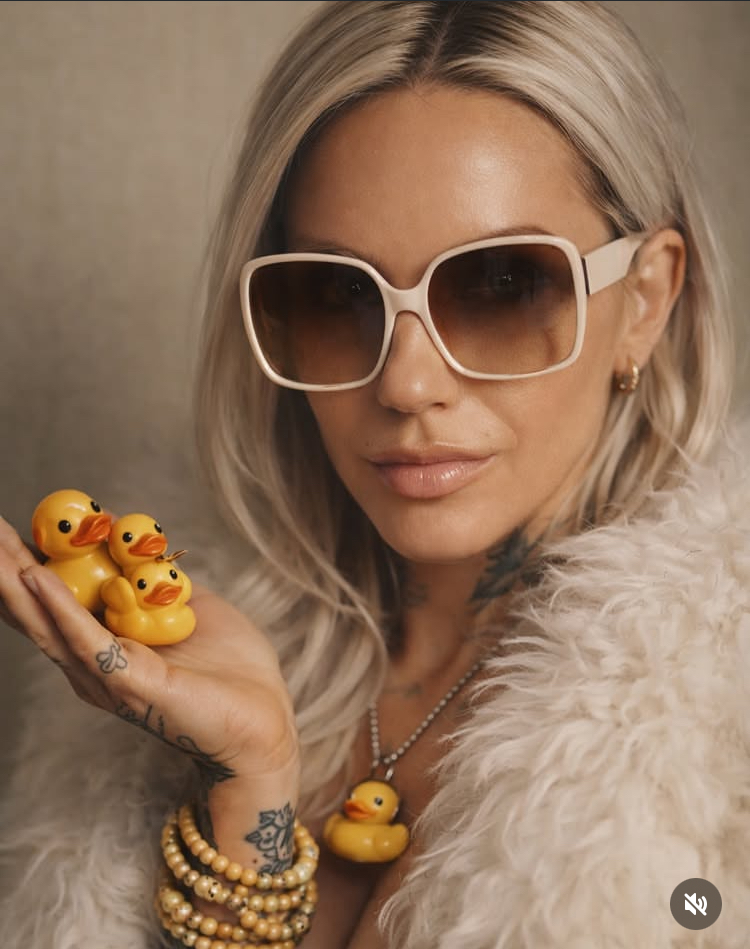
Entrepreneur
Danijela Čolić is a Bosnian-born British entrepreneur, global business strategist, author, brand creator, model and creative whose life has moved from refugee beginnings to building businesses, brands and projects across the world. Her career spans international growth, luxury, interiors, wine, wellness, CBD, hospitality and the arts, alongside representing and modelling for names including Charlotte Tilbury, Tom Ford, Jo Malone London and Castle Fine Art.
Danijela is also the Founder of her own organic CBD brand and author of The Sky Is the Same Everywhere and the Crystal Kids series, Danijela is as comfortable developing a global strategy as she is designing a space, growing food and herbs, creating a brand or becoming the muse behind someone else’s art. Her work and writing are threaded with resilience, beauty, instinct, alchemy and an unapologetic belief in creating life on your own terms.