When the Obstacle Becomes the Path

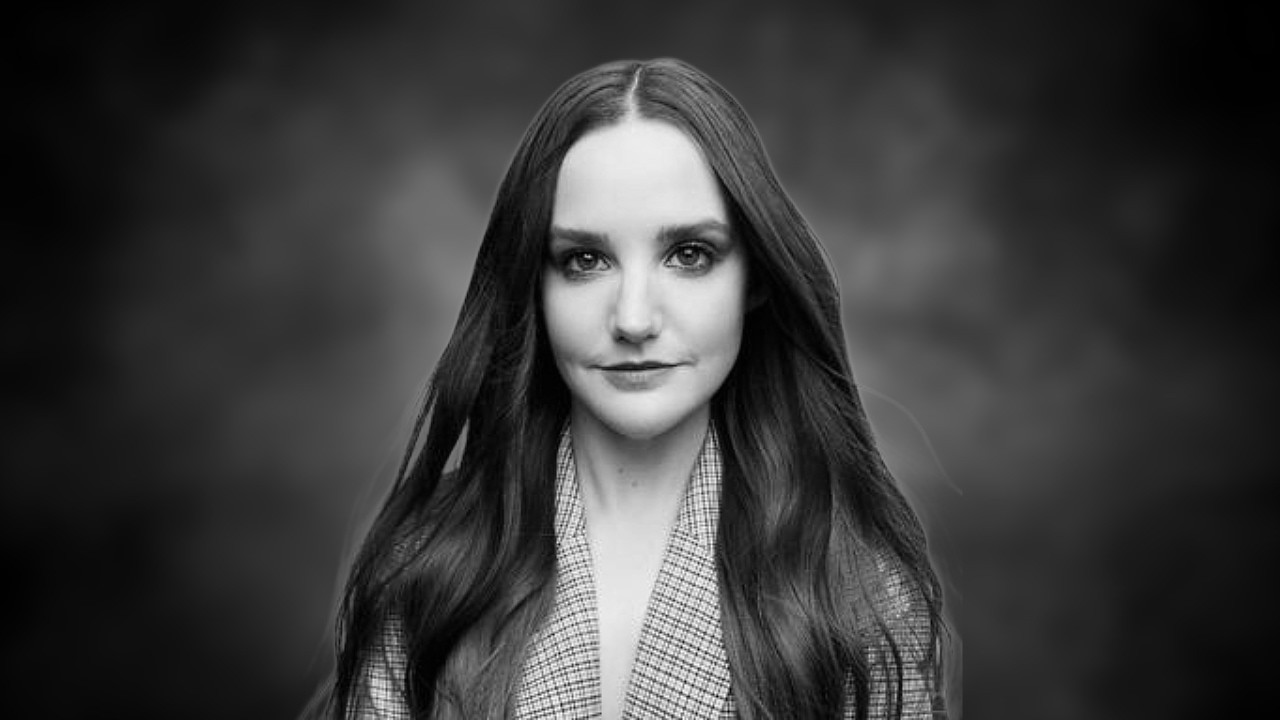
After a life-changing car accident, Jagger Waters reflects on the long journey from survival to acceptance and the unexpected lessons she found along the way.
There are moments in life that arrive without warning and refuse to leave quietly. They don't simply change your plans. They dismantle your assumptions about who you are, what matters and how much control you really have. For Jagger Waters, that moment came on an ordinary drive through California in December 2024.
The irony wasn't lost on her. Professionally, she'd never been in a stronger position. Years of exploring artificial intelligence as a creative tool had opened doors into an industry that was changing by the week. New opportunities were arriving, influential people were paying attention and the future looked wide open. Then, in the space of a few violent seconds, everything she'd been building disappeared behind a cloud of dust and shattered glass.
When surviving isn't the hard part
The accident itself sounds almost impossible. Jagger's car began fishtailing at motorway speed before rolling over and somehow coming to rest upright again. Nobody else was involved. She wasn't physically injured. Even her tiny dog, secured in a car seat that friends had always teased her about, escaped unharmed.
It would have been easy to file the experience away as a lucky escape. Instead, the real damage arrived later.
"I kind of feel like I had like a soup brain."
That's the phrase she still reaches for. Not because it sounds dramatic, but because nothing else quite captures what it felt like to lose the ability to think in the way she'd always trusted herself to think.
The writer who made sense of the world through words suddenly couldn't absorb new information. The creative strategist whose career depended on learning emerging technologies found herself unable to move from one chapter to the next. Her executive function collapsed. Emotions flooded into every thought. Fear stopped respecting boundaries.
"It was like there were no barriers between them anymore."
Sleep disappeared too. Days became weeks. Weeks became months. At one point she went more than a week without sleeping at all. Every hour awake made the next one harder. Everything that had once helped her cope simply stopped working.
The path she never wanted
Recovery didn't begin with breakthroughs. It began with surrender. For months Jagger fought against the interruption. She wanted the accident to become a brief detour before returning to the ambitious career she'd been building. Instead, life kept insisting on a different direction.
She moved away from Los Angeles and found herself living somewhere quieter, surrounded by trees, rivers and chickens instead of traffic and deadlines. Every evening became an exercise in teaching her nervous system something it had forgotten.
A long bath. Tea. Gentle music. One small routine after another.
"I had to teach myself how to sleep again."
It wasn't glamorous. It wasn't productive. It certainly wasn't what she'd imagined for herself.
Then came the realisation that changed everything.
"I felt like there was obstacle. I'm more willing now to see that when there's an obstacle in the path, that becomes the path."
It's an idea that feels obvious only after you've lived it. We spend so much of our lives trying to get back to normal that we fail to notice normal has already gone. The interruption isn't a side quest. It has quietly become the story.
The life she wasn't living
As the months passed, the accident forced Jagger to confront something she'd been avoiding long before the car rolled over.
She'd become isolated.
Working remotely. Living alone. Recovering privately. Carrying heartbreak she rarely spoke about. Looking back, she sees the accident colliding with emotional wounds that already existed, creating what her care team described as one tangled knot of trauma.
She'd spent years trying to become the perfect employee and the perfect partner. When both identities collapsed together, she was left asking who remained underneath.
"I'd spent 10 or 12 years being like, I'm just going to be the perfect employee and the perfect girlfriend."
That pursuit of perfection had quietly narrowed her world. Career and relationships consumed almost everything, leaving little room for friendship, community or simple presence.
Recovery slowly expanded it again.
She found communal living instead of another isolated apartment. She discovered that the life she'd imagined building with a romantic partner could also be created alongside friends. She began making ceramics with no intention of selling them. She decorated her home to delight the younger version of herself rather than impress anyone else.
Success stopped looking like optimisation.
It started looking like belonging.
Becoming softer
One of the most striking moments in the conversation comes when Jagger rejects a phrase many people would consider encouraging.
You're stronger than you think.
It no longer resonates with her.
Instead, she reaches for a different word.
Soft.
She talks about grief becoming less jagged. About crying without fighting the tears. About allowing life to smooth away the sharp edges in the same way running water gradually transforms rough stones into rounded river rocks.
"I feel soft."
It isn't weakness she's describing.
It's the absence of resistance.
The need to constantly push, perform and recover as quickly as possible has given way to something quieter. A willingness to let difficult emotions exist without immediately trying to fix them. A recognition that healing isn't another project to optimise.
That shift has influenced every part of her life. She reclaimed her mind during 2025. Now she's reclaiming her body, returning to exercise with the same patience she'd once reserved for learning to sleep.
Not because she's chasing the person she used to be.
Because she's becoming someone else entirely.
The story might easily have become one about resilience after trauma. Instead, it becomes something far more interesting. It's about questioning the values we return to once the crisis has passed. We often celebrate getting back to where we were, but Jagger isn't interested in returning. The accident exposed a version of life that no longer fit, even before it happened.
Listening to her, it's hard not to wonder how many people are quietly waiting for permission to stop pretending they're fine, to accept interruption instead of fighting it, or to build a life that looks different from the one they once planned. Sometimes the greatest misadventure isn't the event itself. It's discovering that the person waiting on the other side is someone you never expected to become.
Watch or Listen
Jagger's story is full of moments that are difficult to capture on the page. Watch the full conversation on the Life by Misadventure YouTube channel, or listen on your favourite podcast platform to hear her story in her own words.

Founding Partner | Orion Studios
I’m a podcast host, producer and digital media strategist based in the UK. I’m the founder of Futurehand Media, a consultancy I started in 2005, and the founder of Orion Studios, a digital media and production studio in Tunbridge Wells.
Most of my work is built around real conversations delivered through podcasts, interviews, films, client stories (testimonials) and/or brand content. The format changes, but the aim is usually the same: help people and organisations turn ideas, experience and expertise into content that feels useful and human.
Before moving deeper into audio and video, I spent years working for startups focusing on digital marketing and analytics, including leading teams of digital marketing data analysts, which gave me a practical view of what works, what doesn’t, and why so much content fails to connect. I’m interested in simple systems, strong ideas and making things that serve a real audience.
I’ve also worked as a semi-professional photographer, which still shapes how I think about visual storytelling. There’s a big difference between something that simply looks “fine” and something that feels intentional and I try to incorporate that into all my work.
I’m originally from Memphis, Tennessee, and I’ve lived in the UK since 1999, so I tend to bring a mix of Southern storytelling and British pragmatism to the work. I like honest conversations, useful media, and helping people communicate something that actually matters.
I believe the best way to become successful is to help other people succeed. Success isn’t a z… Read More
A Dead Man in the Driveway: How Jody McHugh Found the Light in a Dark Childhood