When the Ocean Took Everything
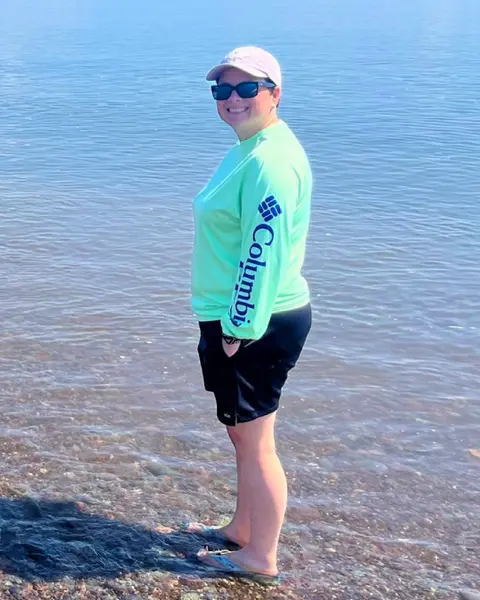
There are moments when life changes so completely that everything becomes divided into before and after. For Tara Pyfrom, that moment arrived in the early hours of 2 September 2019, when the ocean began rising around her family home on Grand Bahama Island. Within hours, the life she had known was disappearing beneath the water.
Tara had spent her entire life in the Bahamas. Hurricanes were familiar, preparations were routine, and her family had built a home designed to withstand severe weather. But Hurricane Dorian was different. What followed would leave Tara, her wife Catherine, their six-year-old daughter and five dogs fighting for their lives, before eventually forcing them to leave their country and begin again thousands of miles away.
When preparation isn't enough
Growing up in the Bahamas meant learning to live with hurricanes. Tara remembers an idyllic childhood of beach parties, swimming in the harbour and exploring the island by bicycle. Storm season was simply part of life.
Every summer brought the familiar routine of watching weather forecasts, stocking up on supplies, securing property and preparing generators. The family had experienced serious hurricanes before, including one that left them without electricity for three weeks.
Their home was relatively new, with hurricane-resistant windows and an elevated foundation. They believed they had taken the necessary precautions.
But three days before Dorian arrived, the forecasts began describing something beyond anything they had experienced. Winds exceeding 175 miles per hour were predicted, and images emerging from neighbouring Abaco Island showed catastrophic destruction.
By then, evacuation was no longer a realistic option. With a young daughter and five dogs, the family had decided to remain at home.
At approximately four o'clock on the morning of 2 September, Tara discovered that the ocean had risen ten feet, completely flooding the surrounding neighbourhood.
Water began entering beneath the doors. Initially, it seemed manageable. A few inches became knee-deep water. Then the furniture began floating.
Before long, the family was struggling to keep their daughter and dogs above the rising floodwater.
"My biggest fear is we're going to drown inside the house with our face pressed against the ceiling, saying our goodbyes to each other."
Twenty-four hours with nowhere to go
As the water continued rising, Tara and Catherine faced an impossible decision. Staying inside meant risking drowning. Going outside meant confronting hurricane-force winds and dangerous floodwater.
They briefly escaped through a window, taking shelter beneath their covered patio. But after approximately thirty minutes, the situation became unbearable. The water was still rising, and there was nowhere safe to go.
Catherine recorded a goodbye video using a waterproof camera.
Eventually, they returned inside and made their way into the attic. Tara remembers swimming the final dog through the flooded house to reach the ladder.
Once everyone was inside, they were trapped.
There was no electricity, no mobile signal and no way of knowing what was happening outside. They could only listen to the wind and hope the roof would hold.
What they didn't know was that Hurricane Dorian had effectively stopped moving. Its eyewall remained over their home for approximately 24 hours.
The family waited in darkness, surrounded by the deafening noise of the storm. Tara and Catherine remained awake while their exhausted daughter somehow managed to sleep.
The water eventually stopped rising just below the attic.
When it finally began to recede, they knew they had survived. But several more hours passed before they could safely climb down and examine what remained.
The interior walls had been destroyed. Furniture had moved across the house. Their sofa was sitting on the kitchen island.
Their home was no longer recognisable.
Then, unexpectedly, a volunteer rescuer appeared on their back deck. Despite the dangerous conditions, members of Bahamas Air and Sea Rescue had taken a small boat out to search for survivors.
They evacuated the entire family, including all five dogs.
"We were lucky. There's no other way of putting it, we were lucky. A lot of people died."
Starting again in an unfamiliar country
Surviving the hurricane was only the beginning.
Tara and her family initially escaped to Florida, hoping to spend several months there while they assessed the damage and worked out what to do next.
Their house had suffered structural damage beyond repair. Although they had insurance, they had lost their home, their routines and the stability they had spent years building.
As their plans for remaining temporarily in Florida became increasingly difficult, they began considering alternatives.
Six weeks after the hurricane, they packed what remained of their belongings into an SUV, loaded their daughter and five dogs, and drove to Canada.
They had never visited the eastern part of the country. They knew almost nobody there. But they needed somewhere safe to start again.
They eventually settled in New Brunswick, choosing a community that offered a suitable school for their daughter and access to the ocean.
Interestingly, despite everything they had experienced, neither Tara nor Catherine could imagine living far from the sea.
Their new life brought another unexpected challenge. Just six months after arriving in Canada, the COVID-19 pandemic began.
Already dealing with the psychological effects of the hurricane, they found themselves isolated in an unfamiliar country, navigating immigration procedures, employment and the demands of raising their daughter.
Although they were physically safe, emotionally they were struggling.
The experience that became a book
Tara speaks openly about the lasting effects of trauma, including anxiety, depression, anger and guilt.
The family prioritised their daughter's mental health, arranging play therapy to help her understand and process what had happened. Tara and Catherine eventually sought professional support for themselves.
For Tara, recovery took years.
She describes reaching a point where she could no longer ignore her own mental health. She had devoted so much energy to keeping the family moving forward that she had neglected how she was feeling.
During therapy, her counsellor discovered that Tara enjoyed writing poetry and encouraged her to begin writing about the hurricane.
The exercise became part of her treatment. She would write about her experiences, read the material aloud during sessions and gradually work through the emotions attached to those memories.
It was difficult, often physically exhausting work.
But over time, something began to change.
"Two years later I feel like, you know, this isn't gonna define the rest of my life. I could write a book. So I did."
Those therapeutic writings eventually became The Ocean in Our Blood, Tara's memoir, published in June 2025.
The book describes the hurricane, its aftermath and the long process of rebuilding a life after profound loss.
More importantly, Tara wanted it to offer something to readers who might be dealing with their own difficult experiences.
She recognises that most people will never survive a Category 5 hurricane, but many will experience events that change their lives in ways they could never have anticipated.
Her message is that recovery is possible, even when it feels impossibly distant.
Learning to live with what happened
Seven years after Hurricane Dorian, Tara and her family have built a new home and a new life in Canada. Their daughter has grown up surrounded by Canadian culture while maintaining a connection to her Bahamian heritage. The family still visits the Bahamas regularly, although Tara has no intention of living through another hurricane.
The psychological effects have not disappeared entirely. Strong winds can still trigger anxiety, and recounting the experience remains emotionally difficult. Tara compares trauma to a scar that sometimes becomes irritated and uncomfortable, even after it has healed. But she has learned to recognise those feelings and manage them.
Perhaps the most meaningful part of Tara's story isn't simply that her family survived one of the most destructive hurricanes in modern history. It's what happened afterwards. Through therapy, writing, family support and time, she gradually found a way to build a life that felt like her own again. Her advice to anyone struggling with trauma is straightforward: ask for help. You don't have to work through everything alone.
Founding Partner | Orion Studios
I’m a podcast host, producer and digital media strategist based in the UK. I’m the founder of Futurehand Media, a consultancy I started in 2005, and the founder of Orion Studios, a digital media and production studio in Tunbridge Wells.
Most of my work is built around real conversations delivered through podcasts, interviews, films, client stories (testimonials) and/or brand content. The format changes, but the aim is usually the same: help people and organisations turn ideas, experience and expertise into content that feels useful and human.
Before moving deeper into audio and video, I spent years working for startups focusing on digital marketing and analytics, including leading teams of digital marketing data analysts, which gave me a practical view of what works, what doesn’t, and why so much content fails to connect. I’m interested in simple systems, strong ideas and making things that serve a real audience.
I’ve also worked as a semi-professional photographer, which still shapes how I think about visual storytelling. There’s a big difference between something that simply looks “fine” and something that feels intentional and I try to incorporate that into all my work.
I’m originally from Memphis, Tennessee, and I’ve lived in the UK since 1999, so I tend to bring a mix of Southern storytelling and British pragmatism to the work. I like honest conversations, useful media, and helping people communicate something that actually matters.
I believe the best way to become successful is to help other people succeed. Success isn’t a z… Read More
A Dead Man in the Driveway: How Jody McHugh Found the Light in a Dark Childhood